Reviewed & written by working baristas and home espresso enthusiasts. Our editorial standards

Independent & Hands-On Since 2020

Premium Espresso Machines & Home Barista Guides

Independent reviews based on months of real-world testing — not manufacturer specifications. Every machine is bought at retail, used daily, and measured before we publish a word about it.

Testing Lab · Melbourne
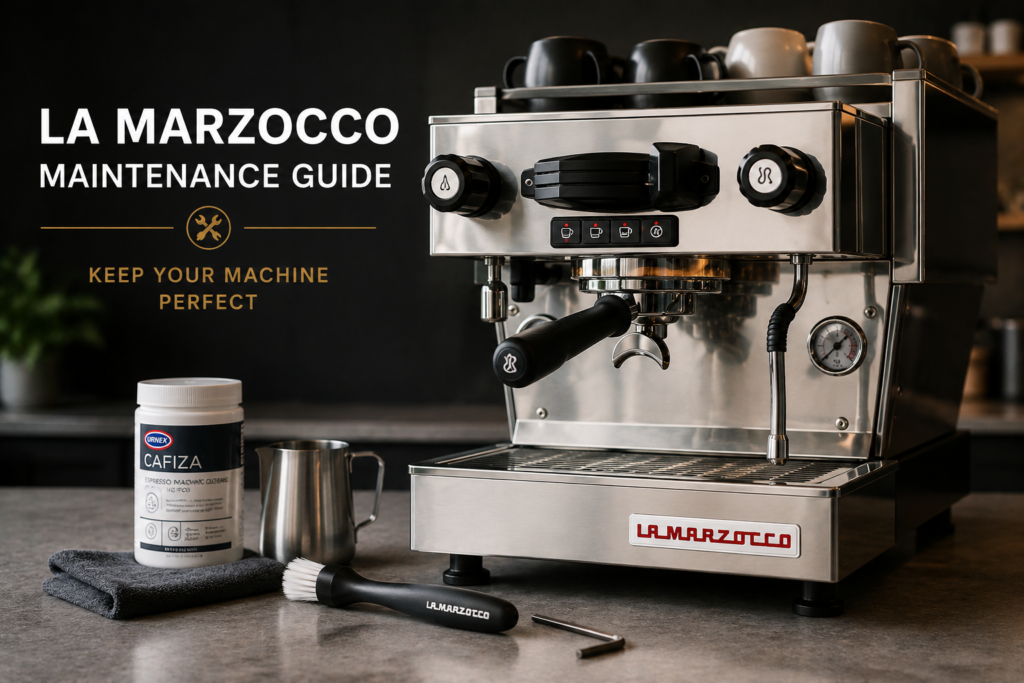
Photo: La Marzocco Linea Mini pulling a measured shot during our 90-day durability test.
500+
Shots Pulled
12+
Machines Tested
3+ mo.
Avg. Testing Period
12 yrs
Professional Experience

Who tests our gear

Saqlain Anjum, professional barista and coffee educator

Saqlain Anjum

Professional Barista & Coffee Educator
12 Years Experience Updated July 19, 2026

Saqlain leads every review and buying guide on Luxe Barista, personally pulling and measuring each test shot before a verdict is published. His background spans specialty cafe bar work, wholesale training, and twelve years of daily espresso practice across single boiler, heat exchanger, and dual boiler machines.

Advertisement

Start Here

Find the Right Starting Point

Home espresso covers a lot of ground. Pick the path that matches where you actually are right now, and we will point you at the guides that answer your next question rather than the twentieth one.

Path 1

I have never made espresso

You want to understand what you are buying before you spend anything. Start with the fundamentals, then look at machines.

  • What espresso actually is, and how it differs from filter coffee
  • Why the grinder matters as much as the machine
  • What a realistic first budget looks like
  • The five accessories that genuinely help, and the ones that do not
Begin Beginner School
Path 2

I am ready to buy

You know roughly what you want and need to narrow the field. Our comparison work is built around real testing rather than spec sheets.

  • Head-to-head comparisons across every price tier
  • Boiler type explained in plain language
  • Which features change shot quality, and which are convenience
  • Long-term reliability notes from months of daily use
See the Buying Guide
Path 3

I own a machine and want better shots

The equipment is not usually the limiting factor. Technique, grind, and maintenance almost always are.

  • Dialing in as a repeatable process, not guesswork
  • Diagnosing sour, bitter, and channelled shots
  • Milk texturing that holds its structure
  • A maintenance schedule that prevents most common faults
Improve Your Shots

Free

Dial In Better Coffee With Our Free Tools

Built from the same testing data behind our reviews — no signup, no ads inside the tool, just the numbers you need at the counter.

Free Calculator

Espresso Dial-In Calculator

Enter your dose and target ratio, get your exact yield instantly — plus a fix if your shot's running fast or slow.

Try it
Free Calculator

Coffee to Water Ratio

Works for espresso, pour over, French press, AeroPress, and cold brew — one tool for every brew method.

Try it
Free Calculator

Descaling Schedule

Enter your water hardness and daily use — get a personalized descaling interval so scale never sneaks up on you.

Try it
Free Calculator

Extraction Yield (TDS)

Turn a refractometer reading into an extraction percentage and see exactly where your shot lands on the chart.

Try it
Free Quiz

Espresso Machine Finder

Five quick questions on budget, space, and experience — get matched to the exact machine we'd recommend.

Take the quiz
Free Calculator

Milk Steaming Temperature

The right target temp for lattes, cappuccinos, and flat whites — and how to spot scalded milk before it happens.

Try it
Free Calculator

Home Espresso Cost Savings

See exactly how much you save vs café coffee, and how many months until your machine pays for itself.

Try it
Free Calculator

Bean Freshness & Shelf Life

Enter your roast date and instantly see your beans' peak window — before they're past their best for espresso.

Try it
Free Quiz

Boiler Type Recommender

Single, heat exchanger, or dual boiler? Three quick questions tell you which architecture actually fits how you brew.

Try it
Free Diagnostic

Espresso Troubleshooter

Sour, bitter, weak, or channeling — pick the symptom and get the specific grind, dose, or ratio fix.

Diagnose it

Knowledge Hub

Master Home Espresso with Expert Guides

Whether you're buying your first espresso machine or perfecting your daily workflow, Luxe Barista provides independent reviews, practical tutorials, maintenance advice, and coffee science to help you brew consistently better espresso.

Pillar Guide

Best Espresso Machines 2026

The central guide linking every machine, brand, and buying decision on the site.

Read the Pillar Guide
Brand Cluster

La Marzocco

Brand Cluster

Prosumer Brands

Equipment Cluster

Grinders & Beans

Skill Cluster

Technique

Fundamentals

What Actually Makes a Good Espresso

Before spending money on equipment, it helps to understand what the equipment is trying to do. Almost every buying decision becomes obvious once this part is clear.

Espresso is a brewing method defined by pressure and ratio rather than by roast level or bean origin. Hot water is forced through a compacted bed of finely ground coffee at roughly nine bars of pressure, extracting a concentrated liquid in around twenty-five to thirty seconds. Everything an espresso machine does — heating water, holding that temperature, generating pressure, and delivering it evenly — exists to make that short window repeatable.

The reason espresso is harder than filter coffee is that the window is short and unforgiving. In a pour-over, a small error in grind size changes the brew time by a few seconds and the flavour shifts slightly. In espresso, the same error can double the flow rate and turn a balanced shot into something sour and thin, or slow it to a crawl and produce something bitter and drying. The margin is narrow, which is why consistency in your equipment and your routine matters more than any single premium feature.

The three variables that do most of the work

Home baristas often have a mental list of ten or fifteen things to control. In practice, three of them account for the overwhelming majority of the difference between a bad shot and a good one.

  • Grind size. This controls the resistance the water meets. It is the single most powerful lever you have, and it is the one you adjust most often — every new bag of coffee, and sometimes as a bag ages.
  • Dose and yield. How much dry coffee goes in, and how much liquid espresso comes out. Expressed as a ratio, this determines strength and, indirectly, how much of the coffee's soluble material you have extracted.
  • Brew temperature. Higher temperatures extract more aggressively. Lighter roasts generally need more heat to open up; darker roasts often taste harsh if pushed too hot.

Notice that only one of those three is really a property of the machine. Grind size belongs to your grinder, and dose and yield belong to your scale and your technique. This is why we say repeatedly across the site that a modest machine paired with a good grinder tends to beat an expensive machine paired with a poor one — and why our grinder reviews get as much testing time as our machine reviews.

Reading a shot instead of counting seconds

Published recipes are useful starting points and terrible finishing points. A common modern reference is an eighteen-gram dose producing roughly thirty-six grams of espresso in about twenty-eight seconds — a 1:2 ratio. That is a reasonable place to begin with a medium roast. It is not a rule, and treating it as one is the most common reason people plateau.

What matters is what the shot tastes like. If it is sour, sharp, and thin in the mouth, water moved through the puck too quickly to dissolve the sweeter compounds — grind finer. If it is bitter, drying, and leaves a lingering ashy finish, the extraction went too far — grind coarser or shorten the shot. Once you connect that feedback loop, the numbers stop being targets and become a record of what worked.

A practical rule we use in testing

Change one variable at a time, and give each change a full shot before judging it. If you adjust grind size, dose, and temperature simultaneously and the result improves, you have learned nothing about which change caused it. This is slower for the first week and dramatically faster for every week after.

Where crema fits in

Crema — the reddish-brown foam on top of a fresh shot — is emulsified oils and dissolved carbon dioxide released under pressure. It is often treated as the primary marker of a good shot, and it is a genuinely unreliable one. Very fresh coffee produces abundant crema regardless of whether the extraction was balanced. Robusta blends produce thick, persistent crema with a flavour many people dislike. Excellent, well-extracted light-roast espresso can arrive with modest crema that dissipates in under a minute.

Crema tells you something about freshness and roast composition. It tells you very little about extraction quality. Taste the shot.

Advertisement

Our Current Picks

Best Espresso Machines, Compared

A snapshot of our top picks across price tiers, updated as new machines complete testing. Prices are approximate recommended retail at time of writing and vary by region and retailer.

Comparison of top-tested espresso machines
Machine Price Boiler Best For Testing Verdict Review link
La Marzocco Linea Mini $8,000+ Dual Boiler Enthusiasts wanting cafe-grade consistency Exceptional temperature stability across 500+ tracked shots. Read Review
Profitec Pro 600 $2,300 Dual Boiler Home baristas ready to upgrade Excellent value dual-boiler performance; slightly noisy pump. Read Review
Rocket Appartamento $1,900 Heat Exchanger Style-conscious daily use Strong build quality; requires a temperature-surfing routine. Read Review
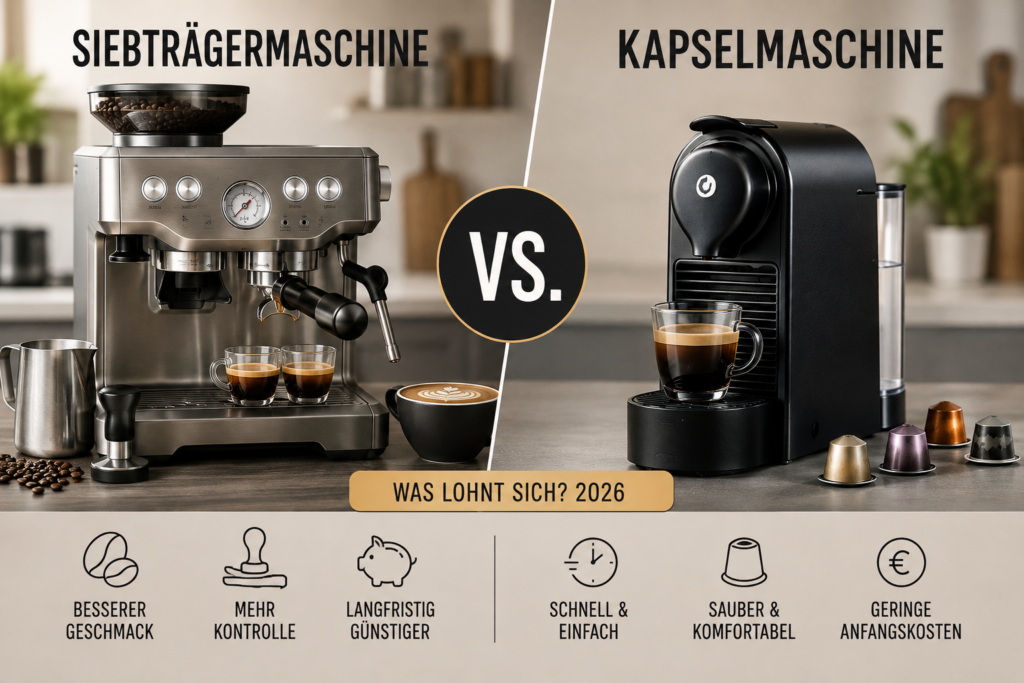
Breville Barista Express $750 Single Boiler First-time buyers wanting a built-in grinder Best beginner value; grinder is fine, not exceptional. Read Review
Gaggia Classic Pro $450 Single Boiler Budget entry into real espresso Capable shots with practice; steam takes patience. Read Review

How to read this table

The price column is the most volatile piece of information here, and the least important one for making a decision. Machines in this category go on sale, get superseded, and shift in price by hundreds of dollars between regions. What tends to remain true across years is the boiler architecture, the build quality, and whether spare parts are available — which is why our verdicts focus there.

The "best for" column reflects who the machine actually suits in daily use, not who the marketing targets. A machine that produces excellent espresso but needs a five-minute temperature routine before every session is a poor fit for someone making one coffee before a commute, regardless of how good the shot is at the end of it.

Buying Knowledge

Single Boiler, Heat Exchanger, or Dual Boiler?

This is the single most consequential specification on an espresso machine, and the one most often glossed over in product listings. Here is what each design actually means for your morning.

Comparison of espresso machine boiler architectures
Boiler Type How It Works Strengths Trade-Offs Typical Price Band
Single Boiler One boiler heats water for brewing, then reheats to a higher temperature for steam. Simple, compact, affordable, easy to service. Fully capable of excellent espresso. You cannot brew and steam at once; you wait for the boiler to change temperature between the two. Entry to lower-mid
Thermoblock / Thermocoil Water is heated on demand as it passes through a heated metal block rather than stored in a boiler. Very fast heat-up from cold, often under a minute. Common in compact all-in-one machines. Temperature can fluctuate more during a shot; steam power is usually modest. Entry
Heat Exchanger (HX) A single steam boiler with a tube running through it; brew water is heated as it passes through that tube. Brew and steam simultaneously. Strong steam power. Long-lived commercial-derived designs. Brew temperature depends on idle time, so many HX machines need a "cooling flush" routine before pulling. Mid to upper-mid
Dual Boiler Two fully independent boilers, one held at brew temperature and one at steam temperature. Independent temperature control, no flush routine, brew and steam simultaneously, most stable of the four. Larger, heavier, more expensive, longer heat-up, more components that can eventually need service. Upper-mid to high

Which one should you actually buy?

The honest answer depends far more on your drinking habits than on your budget.

If you drink espresso or a single milk drink per session, a well-made single boiler is entirely sufficient. The wait between brewing and steaming is around thirty to sixty seconds, which matters not at all when you are making one flat white. Some of the most consistently praised shots in our testing have come from single boiler machines in the hands of someone who understood their routine.

If you regularly make several milk drinks in a row — a household of two or three people all wanting coffee at once — the ability to brew and steam simultaneously stops being a luxury and becomes the difference between a pleasant ritual and a bottleneck. That is where heat exchangers and dual boilers earn their price.

If you drink lighter roasts or like to change coffees frequently, the independent temperature control of a dual boiler is genuinely useful, because you can adjust brew temperature deliberately rather than approximating it with flush timing.

What we would not spend on first

If your total budget is fixed, we would take a single boiler machine plus a capable grinder over a dual boiler machine plus an entry-level grinder, every time. Boiler architecture affects convenience and stability. Grind quality affects whether the shot is good at all.

Equipment

Why the Grinder Deserves Half Your Budget

The most repeated advice in specialty coffee is also the most frequently ignored. Here is the reasoning behind it, and what to look for.

An espresso machine's job is to deliver hot water at consistent pressure and temperature. That is a genuinely difficult engineering problem, and better machines solve it better. But the machine has no influence at all over the physical structure of the coffee bed it pushes water through — and that structure determines whether the water flows evenly or carves a channel straight through one weak point.

A grinder that produces a wide spread of particle sizes creates a bed with inconsistent resistance. Water finds the path of least resistance, over-extracts the fine particles it passes and under-extracts everything it bypasses, and delivers a shot that is simultaneously bitter and sour. No machine can correct for this. It is the reason a poor grinder puts a hard ceiling on shot quality regardless of what it is attached to.

Burr versus blade

Blade grinders chop coffee with a spinning blade, producing a random distribution of particle sizes ranging from dust to chunks. They are unsuitable for espresso and this is not a matter of degree — a blade grinder cannot produce a workable espresso bed. Burr grinders crush beans between two abrasive surfaces set a fixed distance apart, so particle size is determined by that gap rather than by how long you run the motor.

Flat versus conical burrs

Both are legitimate designs used in excellent grinders, and the difference is more nuanced than internet debate suggests.

  • Conical burrs use a cone-shaped inner burr inside a ring. They generally run cooler, retain slightly less coffee, and are common at both entry and very high-end price points. Many people describe the resulting cup as having more texture and body.
  • Flat burrs use two parallel rings. They tend to produce a narrower particle distribution, which many tasters associate with greater clarity and separation of flavours, particularly with lighter roasts.

Neither is objectively superior. Build quality, burr alignment, and adjustment precision within a given grinder matter considerably more than which of the two geometries it uses.

What to actually look for

  1. Stepless or fine-stepped adjustment. Espresso needs small adjustments. A grinder with coarse, widely spaced steps will frequently leave you stuck between "too fast" and "too slow" with nothing in between.
  2. Low retention. Coffee left inside the grinder between uses comes out stale in your next dose and makes weighing inaccurate. Single-dose designs address this directly.
  3. Burr alignment. Misaligned burrs widen particle distribution regardless of burr quality. This is often the real difference between two grinders with identical stated specifications.
  4. Serviceability. Burrs wear. A grinder with replaceable burrs and available parts is a long-term purchase; one without is a consumable.
  5. Sensible workflow. Doser, hopper, chute design, and static behaviour all affect whether you enjoy using it daily. This is not a trivial concern — the grinder you find annoying is the grinder you eventually stop dialing in properly.

Built-in grinders

All-in-one machines with integrated grinders are a reasonable and popular starting point, and they remove a real barrier to entry. The trade-off is that the integrated grinder is usually the weaker half of the package and cannot be upgraded independently. Many owners eventually add a separate grinder and keep using the machine, which is a perfectly sensible upgrade path.

Advertisement

Budgeting

What Your Money Actually Buys

Price increases in espresso equipment are not linear improvements in shot quality. Understanding what each tier adds makes it far easier to decide where to stop.

Entry Tier

What you get: A capable single boiler or thermoblock machine and a basic burr grinder. Plastic in non-critical areas, a pressurised basket often included alongside a standard one.

What is genuinely achievable: Good espresso. Not "good for the price" — actually good, provided you replace the pressurised basket, weigh your dose, and take the time to dial in.

What you give up: Speed, steam power, temperature stability across back-to-back shots, and long-term repairability.

Mid Tier

What you get: Heat exchanger or entry dual boiler machines, metal bodies, commercial-standard 58mm portafilters, rotary or improved vibration pumps, and a real grinder with fine adjustment.

What changes day to day: Consistency. Shots become repeatable rather than occasionally excellent. Steam becomes genuinely capable of proper microfoam. Parts become available.

Who this suits: Anyone making coffee daily for more than one person, or anyone who has already outgrown an entry setup.

High Tier

What you get: Commercial-derived dual boiler machines, saturated or E61 groups with serious thermal mass, PID control, pressure profiling on some models, and grinders with large precision-aligned burrs.

What changes: Margins. Temperature holds within tighter bounds, the machine recovers faster, and the equipment stops being a variable in your results at all.

Honest caveat: The jump from mid to high tier is smaller in the cup than the jump from entry to mid. You are buying stability, longevity, and pleasure of use as much as flavour.

The accessories that are actually worth buying

Accessory marketing is aggressive and mostly unnecessary. In our testing, these four consistently justify their cost regardless of tier:

  • A scale that reads to 0.1g. Without one you are guessing at both dose and yield, which are two of your three main variables. This is the highest-value purchase per dollar in the entire category.
  • A non-pressurised basket. Pressurised baskets create artificial crema and mask grind problems, which makes learning nearly impossible. Most machines ship with both; use the standard one.
  • A bottomless portafilter. A diagnostic tool more than a brewing one. It makes channelling immediately visible so you can tell whether your problem is grind or puck prep.
  • A distribution tool or WDT needle set. Evening out the grounds before tamping removes clumps and reduces channelling, particularly with lighter roasts and single-dose grinders.

Things we would not prioritise early: precision tampers with pressure gauges, decorative portafilter handles, puck screens, and most branded cleaning gadgets that duplicate what a cloth and a cleaning tablet already do.

Why Trust Us

Real Testing, Not Sponsored Rankings

Every claim on this site is backed by something we measured ourselves.

1

We buy machines ourselves

The large majority of units we review are purchased at full retail price, like any customer.

2

Months of testing

Every machine sees daily use for a minimum of three months before we publish a verdict.

3

No sponsored rankings

Manufacturers never see or influence our rankings before publication.

4

Real extraction measurements

We log dose, yield, and extraction time on every test shot, not estimated ranges.

5

Temperature testing

Brew and steam temperature stability are measured across a full testing session, not just once.

6

Long-term durability

We track wear, gasket condition, and recurring issues over months, not a single unboxing.

Our Process

How We Test

The same five-stage process, applied to every machine, every time.

  1. 1

    Purchase

    We buy the machine at retail price, the same way a reader would.

  2. 2

    Daily Testing

    The machine enters daily rotation in a real home-use environment.

  3. 3

    Measurements

    We log extraction ratios, temperature stability, and steam performance.

  4. 4

    Long-Term Review

    After three-plus months, we assess durability, wear, and consistency.

  5. 5

    Annual Updates

    We revisit the review at least once a year to confirm the verdict still holds.

What we measure, specifically

"Hands-on testing" is a phrase used by a lot of sites that unbox a machine and photograph it. Here is what it means at Luxe Barista, in detail, so you can judge our conclusions against our method rather than taking them on faith.

Temperature stability

We record brew water temperature at the group across a session, not from a single reading at idle. That includes the first shot of the day from a cold-ish start, back-to-back shots with realistic gaps, and a shot pulled immediately after steaming. A machine that reads perfectly at idle and drops several degrees on the second consecutive shot behaves very differently in a real household than its specification sheet suggests.

Extraction consistency

Every test shot is weighed in and weighed out, and the time is recorded. We hold grind and dose constant and look at the spread in yield and time across a run of shots. Tight spread means the machine and grinder combination is repeatable; wide spread means something in the system is introducing variability, and we work to identify which part.

Steam performance

We time how long a fixed volume of milk takes to reach target temperature, and we assess whether the machine can hold pressure through the whole process or fades toward the end. We also note recovery time before the next shot, because that is what determines whether you can serve two drinks without waiting.

Durability and wear

Over the testing period we track group gasket condition, shower screen fouling, any change in pump noise, seal weeping, and the behaviour of switches, valves, and steam knobs under daily use. We also note parts availability and how difficult routine service tasks are — replacing a gasket should not require dismantling the machine.

What we deliberately do not do

  • We do not publish a verdict from a short loan period or a press event.
  • We do not rank machines we have not personally used for the full testing period.
  • We do not accept manufacturer review copy, supplied test data, or pre-publication input on rankings.
  • We do not present taste preference as measurement. Where a conclusion is subjective, we say so.

Troubleshooting

Nine Problems Almost Every Home Barista Hits

These come up constantly in reader questions and in our own training work. Most have a straightforward fix once you know what you are looking at.

1. The shot runs in eight seconds

Your grind is far too coarse for espresso, or you are using a pressurised basket with unpressurised expectations. Grind significantly finer — more than feels reasonable if you are coming from filter coffee — and re-test. A shot gushing straight through will always taste sour and thin.

2. The shot barely drips, or chokes entirely

Grind is too fine, dose is too high for the basket, or both. Reduce dose to the basket's rated capacity first, since that is easier to control, then adjust grind coarser one step at a time.

3. Spraying from one side of a bottomless portafilter

This is channelling, and it is a puck preparation problem rather than a grind problem in most cases. Distribute the grounds properly before tamping, tamp level rather than hard, and avoid knocking the portafilter after tamping — that cracks the puck.

4. Every shot tastes different despite identical settings

Something is varying that you are not measuring. The usual culprits are inconsistent dose weight, grinder retention mixing old and new coffee, or temperature drift on a machine that needs a flush routine. Weigh everything for a week and the pattern will surface.

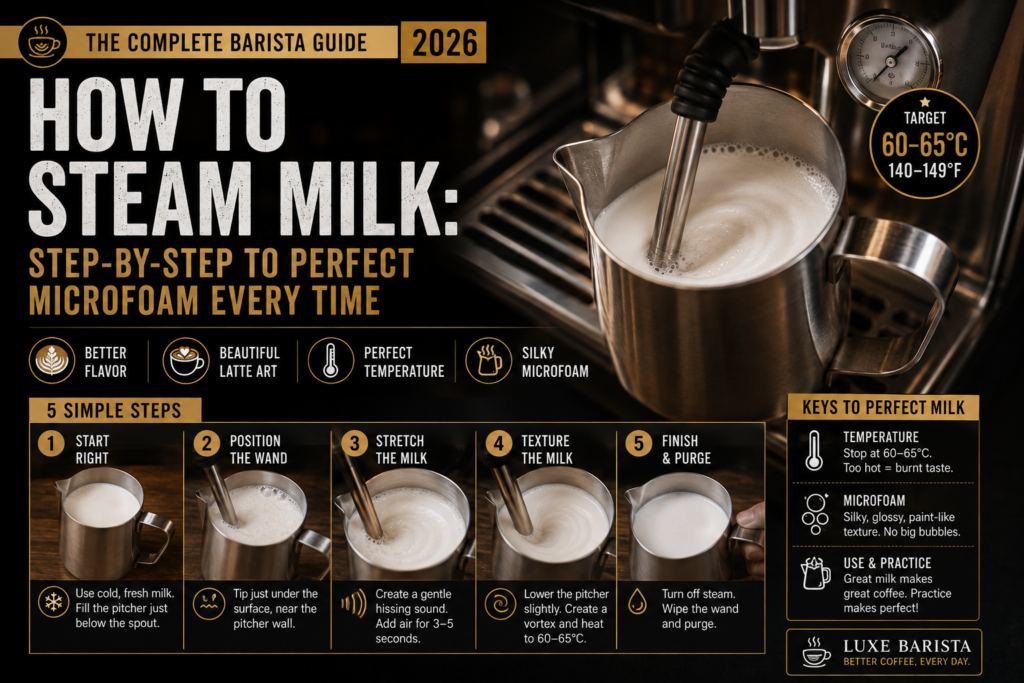
5. Milk foam is bubbly rather than glossy

Air is being introduced for too long, or the steam wand is positioned wrong. Introduce air only in the first few seconds, keeping the tip just under the surface, then submerge fully to create a smooth rolling vortex that folds the foam into the milk.

6. Milk tastes scalded

The milk went too hot. Stop steaming when the pitcher becomes uncomfortable to hold — roughly sixty to sixty-five degrees Celsius. Above that, the sweetness that makes milk drinks pleasant is destroyed and cannot be recovered.

7. Coffee tastes fine on day one and flat by day fourteen

This is normal staling, not a fault. Coffee is best from roughly a week to a month after roast for espresso. Keep beans whole in an airtight container away from light and heat, and buy quantities you will finish within a few weeks rather than bulk.

8. The machine gets slower and the shots get hotter over months

Scale is building. Descale according to your water hardness, and consider filtering your water. This is the single most common cause of espresso machine failure and it is entirely preventable.

9. Chasing the perfect shot and getting worse

Over-adjusting is real. If you change three variables between every shot, you cannot learn anything, and each result feels random. Lock everything, change one thing, taste, repeat. Progress will feel slower for a few days and then arrive all at once.

Maintenance

A Realistic Maintenance Schedule

Most espresso machine faults we have seen are maintenance faults. This schedule prevents the large majority of them and takes very little time once it becomes habit.

Recommended espresso machine maintenance schedule
Frequency Task Why It Matters Time
After every shot Wipe the steam wand and purge it; knock out the puck and rinse the basket. Dried milk inside a wand is difficult to remove and affects taste and hygiene. Old grounds go rancid. 15 seconds
Daily Flush the group briefly; wipe the shower screen and group gasket with a cloth. Removes loose grounds before they bake onto the screen and cause uneven flow. 1 minute
Weekly Backflush with a blind basket and espresso machine detergent (on machines with a three-way valve). Soak portafilter and baskets in detergent solution. Coffee oils accumulate in the group and turn rancid, producing an unmistakable stale bitterness in every shot. 10 minutes
Monthly Remove and clean the shower screen and dispersion block. Inspect the group gasket for hardening or cracking. A hardened gasket causes leaks around the portafilter and pressure loss during the shot. 20 minutes
Every 4–8 weeks Descale, with frequency set by your water hardness and usage. Soft filtered water extends this considerably. Scale restricts flow, insulates heating elements, and is the leading cause of premature machine failure. 45 minutes
Every 6–12 months Replace the group gasket. Deep clean the drip tray and drain line. Check grinder burrs for wear. Consumable parts degrade predictably; replacing them on schedule avoids diagnosing phantom problems. 1 hour
Every 2–4 years Replace grinder burrs (usage dependent). Consider professional service on prosumer machines. Worn burrs widen particle distribution gradually, so shot quality declines without an obvious cause. Varies

Always check your manual first

Descaling procedures and approved products vary meaningfully between machines, and some manufacturers void warranty coverage if the wrong solution is used or if a machine with certain internal components is descaled at all. Treat the schedule above as a general framework and your manufacturer's instructions as authoritative.

Advertisement

Coffee Science

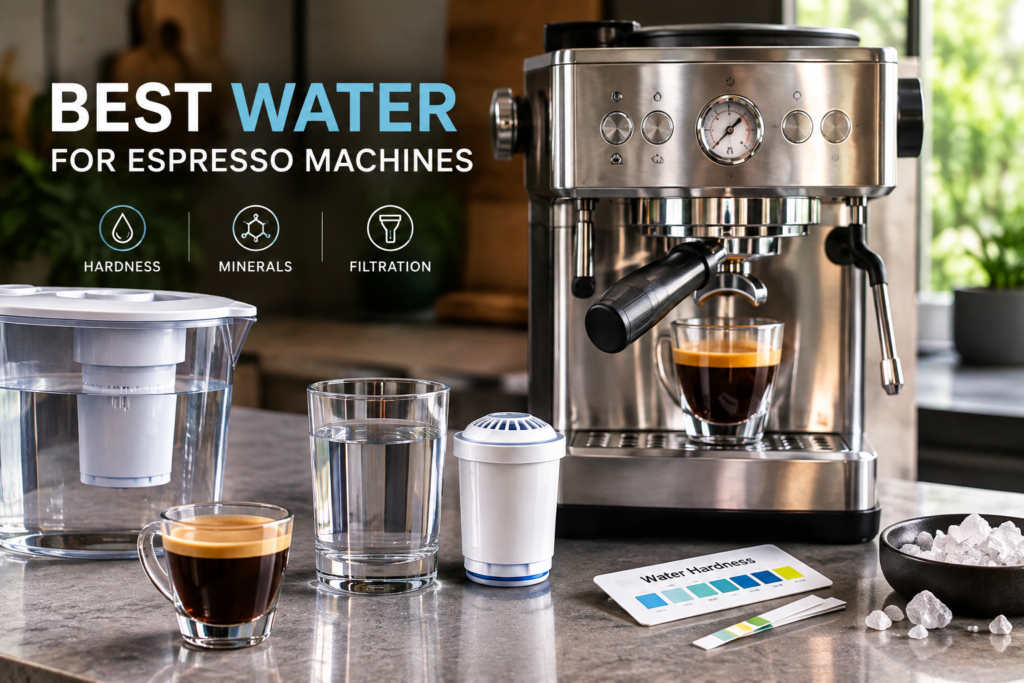
Water: The Ingredient Nobody Weighs

Espresso is more than ninety percent water by weight. It is the largest ingredient in the cup and the one most people never think about.

Water affects espresso in two distinct ways that are easy to conflate. The first is extraction: dissolved minerals, particularly magnesium and calcium, actively participate in pulling flavour compounds out of the coffee. The second is machine health: the same minerals that help extraction precipitate out as scale when heated, coating boilers and restricting flow.

These two effects pull in opposite directions, which is why "just use distilled water" is bad advice despite being good for scale prevention. Water with essentially no mineral content extracts poorly and tastes flat and hollow, and in some machines it can be actively corrosive to metal components. The goal is balance, not purity.

What good espresso water looks like

  • Moderate hardness. Enough mineral content to extract properly, low enough that scale accumulates slowly. Most water filters aimed at coffee target this range deliberately.
  • Low alkalinity relative to hardness. High alkalinity buffers the coffee's acidity and flattens the cup, which is often experienced as espresso that tastes dull no matter how well it is dialed in.
  • No chlorine. Chlorine and chloramine produce an immediately noticeable off-flavour and are among the easiest things to remove with basic filtration.
  • Clean and odourless at the tap. If your water tastes noticeably of anything before it reaches the machine, that flavour will carry into every cup.

Practical options

  1. Filter jug or in-line filter. The simplest improvement for most households. Removes chlorine and reduces hardness, though the degree varies significantly by product.
  2. Bottled water with published mineral content. Consistent and easy to verify, but expensive and wasteful for daily use. Useful for diagnosing whether water is your problem.
  3. Distilled or reverse-osmosis water plus a mineral concentrate. The most controlled option: start from near-zero and add back exactly what you want. Popular among people chasing consistency, and it eliminates scale almost entirely.

A cheap diagnostic

If your espresso tastes flat and lifeless across different coffees, different grind settings, and different machines, water is a strong suspect. Pull one shot with a known bottled water of moderate mineral content and compare. It is a fifteen-minute test that has resolved more reader problems than any equipment change we have recommended.

Brands We've Tested

Brands Tested In Our Lab

Brand names are used here for identification only. Luxe Barista is not affiliated with, sponsored by, or endorsed by any manufacturer listed.

La Marzocco
Rocket
Profitec
Breville
Slayer
Eureka
ECM
Lelit
Rancilio
Gaggia

Editorial Values

What We Stand For

No clickbait

Headlines describe what we actually found.

Independent

No manufacturer sits between our testing and our verdict.

Hands-on

If we haven't used it ourselves, we don't rank it.

Evidence-based

Every claim traces back to a logged measurement.

Transparent

Our methodology and funding are public, always.

Reader-first

We recommend what we'd tell a friend to buy.

Editorial Standards

How We Work, In Detail

Values are easy to state. These are the specific practices behind them.

Sourcing and verification

Performance claims on this site come from our own measurements. Where we cite a manufacturer specification — boiler capacity, power draw, dimensions — we label it as a specification rather than a tested result, because those are different kinds of claim.

Where a conclusion depends on subjective taste assessment, we say so explicitly rather than presenting preference as fact. Two experienced tasters can reasonably disagree about a shot, and pretending otherwise would be dishonest.

Corrections policy

We get things wrong sometimes. When we do, we correct the article rather than quietly deleting it, and we note what changed and when at the point of the correction.

If you believe something on this site is inaccurate, contact us with the specific claim and we will re-test where re-testing is possible. Reader corrections have improved several of our guides.

Update cadence

Buying guides are reviewed at least annually, and sooner when a manufacturer revises a model, changes a specification, or discontinues a product. The update date shown on each guide reflects the last substantive review, not a cosmetic edit.

Reviews of machines still in our rotation gain long-term notes over time — durability observations at six months and twelve months that were not available at publication.

Funding and independence

Luxe Barista is reader-supported. Some links on this site are affiliate links, meaning we may earn a commission if you purchase through them at no additional cost to you.

Affiliate relationships never determine what we recommend, how machines are ranked, or whether a product receives a negative verdict. Several of our lowest-scoring reviews cover products with affiliate programs. Our full funding disclosure explains the arrangement in detail.

Reference

Home Espresso Glossary

The vocabulary used across our reviews and guides, defined plainly. Bookmark this if you are new — most espresso confusion is terminology confusion.

Extraction
The process of dissolving soluble compounds out of ground coffee. Under-extraction tastes sour and thin; over-extraction tastes bitter and drying.
Brew Ratio
Dry coffee dose compared to liquid espresso yield. A 1:2 ratio means 18g of coffee producing 36g of espresso.
Dose
The weight of dry ground coffee placed in the basket, measured in grams.
Yield
The weight of finished liquid espresso in the cup. Measured by weight, not volume, because crema makes volume unreliable.
Channelling
Water finding a low-resistance path through the coffee bed instead of flowing evenly, causing simultaneous over- and under-extraction.
Puck
The compacted disc of ground coffee in the portafilter basket during and after brewing.
Portafilter
The handled device holding the basket that locks into the group head. Commercial standard is 58mm.
Bottomless Portafilter
A portafilter with no spouts, exposing the underside of the basket so channelling is visible during extraction.
Group Head
The part of the machine the portafilter locks into, where water is delivered to the coffee.
E61 Group
A classic thermosyphon group design with high thermal mass, widely used in prosumer machines and known for stability once warmed up.
Saturated Group
A group head in direct contact with the boiler water, offering very stable temperature. Common in commercial and high-end home machines.
PID
A temperature control system that holds boiler temperature within a narrow band, replacing simpler on/off thermostats.
Pre-infusion
A short period of low-pressure wetting before full pressure is applied, helping the puck saturate evenly and reducing channelling.
Pressure Profiling
Deliberately varying pump pressure during a shot to shape extraction. Found on higher-end and lever machines.
Temperature Surfing
Timing a shot relative to the heating cycle on machines without stable temperature control, to catch the right brew temperature.
Cooling Flush
Running water through the group of a heat exchanger machine before brewing, to bring overheated brew water down to target.
Backflush
Cleaning the group by forcing water backward through it using a blind basket, usually with detergent. Requires a three-way valve.
Blind Basket
A basket with no holes, used for backflushing. Also called a blank basket.
Pressurised Basket
A basket with a restricted outlet that creates artificial crema, forgiving of poor grind but limiting for real espresso.
WDT
Weiss Distribution Technique — stirring grounds with fine needles to break up clumps before tamping.
Retention
Coffee left behind inside a grinder between doses, which stales and contaminates the next dose.
Single Dosing
Grinding exactly the amount needed for one shot rather than filling a hopper, keeping coffee fresh and allowing easy switching between beans.
Burr Alignment
How parallel a grinder's burrs are to each other. Poor alignment widens particle distribution regardless of burr quality.
Microfoam
Steamed milk with bubbles too small to see individually, producing a glossy, paint-like texture suitable for latte art.
Crema
The foam layer on fresh espresso, formed from emulsified oils and dissolved carbon dioxide. An unreliable indicator of quality.
Degassing
The release of carbon dioxide from coffee after roasting. Very fresh coffee can be difficult to extract evenly until it has rested.
Dialing In
The iterative process of adjusting grind, dose, and yield until a specific coffee tastes balanced on your equipment.
Ristretto
A shorter, more concentrated shot, typically around a 1:1 to 1:1.5 ratio.
Lungo
A longer, more diluted shot, typically 1:3 or beyond.
TDS
Total Dissolved Solids — a measure of how much coffee material is dissolved in the liquid, used with a refractometer to calculate extraction yield.
Thermoblock
A heating system that warms water on demand as it passes through a heated metal block rather than storing it in a boiler.
Rotary Pump
A quieter, longer-lived pump type found in higher-end machines, often plumbable, as opposed to a vibratory pump.

From Our Readers

What Readers Say

The Linea Mini review was the only one that actually measured temperature drift instead of just repeating the spec sheet. It's why I bought mine.

Daniel R.
Verified Reader · Melbourne

Beginner School finally explained dialing in a way that made grind size click for me. Consistent shots within two weeks.

Priya K.
Verified Reader · Sydney

Appreciated seeing the actual testing photos and update dates. Most review sites don't show their work like this.

Marcus T.
Verified Reader · Brisbane
Advertisement

Frequently Asked

Common Questions

The questions we are asked most often, about our methods and about espresso itself.

How does Luxe Barista test espresso machines?
We purchase every machine at full retail price, run it daily in a home-use environment for a minimum of three months, and log extraction ratios, temperature stability, and steam performance across hundreds of shots before publishing a verdict.
Does Luxe Barista accept payment for positive reviews?
No. We never accept payment, free long-term loans in exchange for coverage, or manufacturer input on rankings. Our full funding disclosure explains exactly how the site is supported.
Where do you get the machines you review?
We buy the large majority of machines ourselves at retail price. On the rare occasion a unit is loaned for testing, we disclose it clearly on that specific review and it never affects the verdict.
How often are reviews and buying guides updated?
Every buying guide is reviewed at least once a year, and sooner if a manufacturer changes a model, price, or specification. Update dates are shown at the top of every guide.
What's the difference between a heat exchanger and a dual boiler machine?
A heat exchanger machine uses one boiler for both brewing and steam, drawing brew water through a tube inside the steam boiler. A dual boiler machine uses two fully separate boilers, giving independent temperature control for brewing and steaming at the same time. In practice, the dual boiler removes the need for a cooling flush routine and lets you set brew temperature deliberately.
Is a more expensive espresso machine always better?
Not necessarily. Price often reflects build materials, temperature stability, and repairability rather than shot quality alone. A well dialled-in $700 machine can outperform a poorly maintained $3,000 one, which is why we test across every price tier.
Do I need an expensive grinder if I have a good espresso machine?
Grind consistency affects extraction more than almost any other variable. In our testing, upgrading from an entry-level grinder to a burr grinder with finer adjustment produced a bigger improvement in shot quality than upgrading the machine itself.
How long does it realistically take to learn to pull good espresso at home?
Most students in our Beginner School reach consistent, balanced shots within two to four weeks of daily practice, once they understand dose, grind size, and extraction time as one connected system rather than separate settings.
How often should I descale my espresso machine?
For most home water hardness levels, every 4 to 8 weeks with regular use. Our maintenance guides include hardness-based schedules and step-by-step descaling instructions for specific machine models. Always check your manufacturer's instructions first, as approved products and procedures vary.
Does Luxe Barista test La Marzocco home machines specifically?
Yes. We maintain a dedicated La Marzocco hub covering the Linea Mini, Micra, and GS3, including long-term durability notes gathered over months of daily use in a home setting.
What's the single biggest mistake home baristas make?
Chasing a recipe number instead of tasting and adjusting. Extraction time and yield are guides, not rules — grind size should be adjusted shot to shot based on how the espresso actually tastes.
What is a normal espresso brew ratio?
A common modern starting point is 1:2 — for example an 18 gram dose producing about 36 grams of liquid espresso in roughly 25 to 30 seconds. Lighter roasts often taste better stretched longer to 1:2.5 or 1:3, while traditional dark roasts can be pulled shorter at around 1:1.5. Treat any published ratio as a starting point to adjust from, not a target to hit.
Why does my espresso taste sour?
Sourness usually indicates under-extraction: water passed through the coffee too quickly to dissolve the sweeter compounds. Grind finer, raise the dose slightly, or increase brew temperature. Check grind size first, since it has the largest effect on flow rate.
Why does my espresso taste bitter or harsh?
Bitterness and a drying, ashy finish usually indicate over-extraction. Grind coarser, shorten the shot time, or lower the brew temperature by a degree or two. Stale or over-roasted coffee can also produce harshness even at correct extraction, so consider the beans as well as the settings.
Do I need a bottomless portafilter?
It is not required, but it is one of the cheapest diagnostic tools available. A bottomless portafilter makes channelling immediately visible, so you can see whether the problem is your puck preparation rather than your grind setting or your machine.
How much should I spend on my first espresso setup?
Budget for the machine and grinder together rather than separately, and allocate a meaningful share to the grinder. A modest machine paired with a capable burr grinder consistently outperforms an expensive machine paired with a poor grinder in our testing. Also set aside a small amount for a 0.1g scale and a non-pressurised basket.
Does water quality really affect espresso?
Yes, in two ways. Mineral content changes how flavour compounds are extracted and perceived, and hardness determines how quickly scale builds inside the boiler. Water that is too soft tastes flat and can be corrosive, while very hard water damages machines over time. Moderate, filtered, chlorine-free water is the practical target.
Can I use pre-ground coffee for espresso?
You can, but results will be inconsistent. Pre-ground coffee is fixed at one grind size, so you cannot adjust flow rate, and it stales quickly once ground because far more surface area is exposed to oxygen. If pre-ground is your only option, buy small quantities and use them quickly.
How long do espresso machines last?
It depends far more on maintenance and water than on brand. Entry-level machines commonly last several years with routine cleaning, while well-maintained prosumer and commercial-derived machines with available spare parts can run for a decade or longer. Scale from untreated hard water is the most common cause of early failure.
Is Luxe Barista affiliated with any manufacturer?
No. Luxe Barista is an independent publication with no ownership, sponsorship, or editorial relationship with any espresso machine or grinder manufacturer. Brand names appear on this site for identification purposes only. Our funding disclosure page explains how the site is supported.

Disclosures

Affiliate disclosure: Luxe Barista is reader-supported. Some links on this site are affiliate links, and we may earn a commission if you buy through them at no extra cost to you. Affiliate relationships do not influence our testing, our rankings, or our verdicts. See our full funding disclosure.

Trademarks: All product and brand names mentioned are the property of their respective owners and are used here for identification purposes only. Luxe Barista is not affiliated with, sponsored by, or endorsed by any manufacturer.

General guidance: Information on this site is provided for general educational purposes. Always follow your manufacturer's instructions for cleaning, descaling, and servicing your specific machine. Content last reviewed July 19, 2026.

Get the free Espresso Dial-In Cheat Sheet

The exact ratios and settings we use to dial in every machine we test.