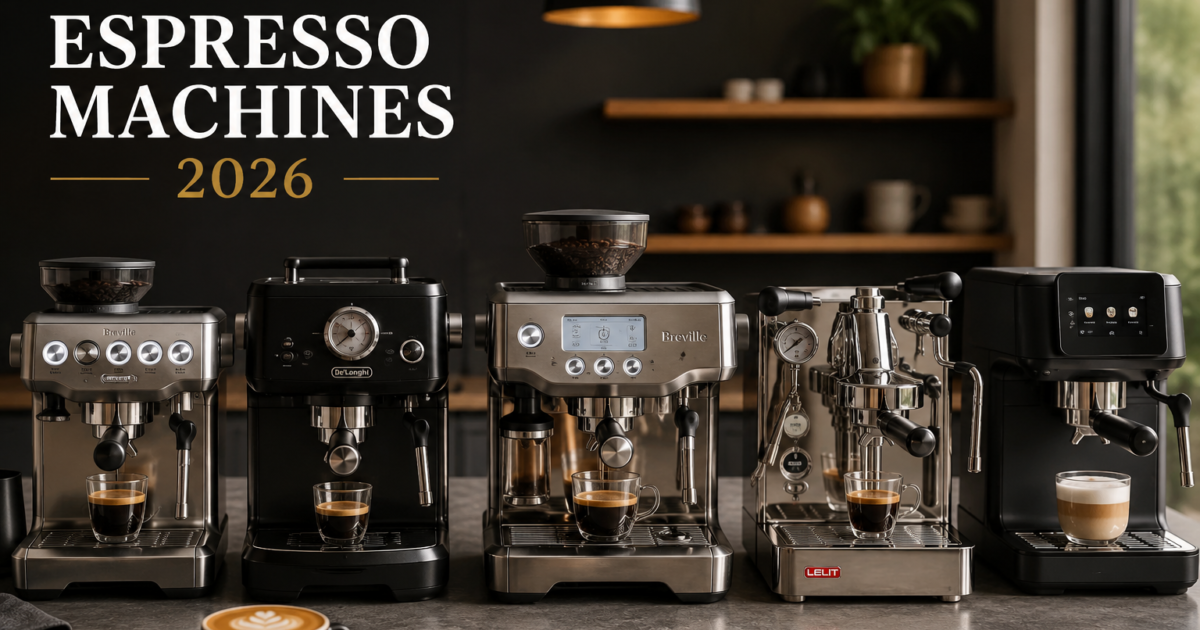
Introduction: Why the Best Espresso Machines Transform Your Morning Ritual
There’s something magical about pulling a perfect shot of espresso. That rich crema, the bold aroma, the velvety texture — it’s the foundation of every great latte, cappuccino, and flat white. But you don’t need to queue at your local café every morning. With the best espresso machines, you can bring that experience into your own kitchen.
Approximately 98 million cups of coffee are consumed every day in the UK alone, and home espresso machines are booming. Whether you’re a curious beginner or a seasoned home barista, the right machine makes all the difference. In this guide, we’ve tested and compared the best espresso machines for 2026 — across every budget and skill level — so you can find your perfect match.
Types of Espresso Machines: Which One Is Right for You?
Before diving into our top picks, it helps to understand the four main types of espresso machines. Each offers a different balance of control, convenience, and cost.
| Type | Best For | Key Feature |
|---|---|---|
| Manual | Purists who want total control | Lever‑operated; you control pressure and flow |
| Semi‑Automatic | Most home baristas | You grind, tamp, and start/stop the shot |
| Fully Automatic | Convenience lovers | One‑touch brewing with built‑in grinder |
| Pod / Capsule | Speed and simplicity | Pre‑dosed pods, minimal cleanup |
Semi‑automatic machines are the sweet spot for most people. They give you enough hands‑on control to learn the craft without overwhelming complexity. According to America’s Test Kitchen, nearly all their favourite espresso machines are semi‑automatic.
The 7 Best Espresso Machines of 2026
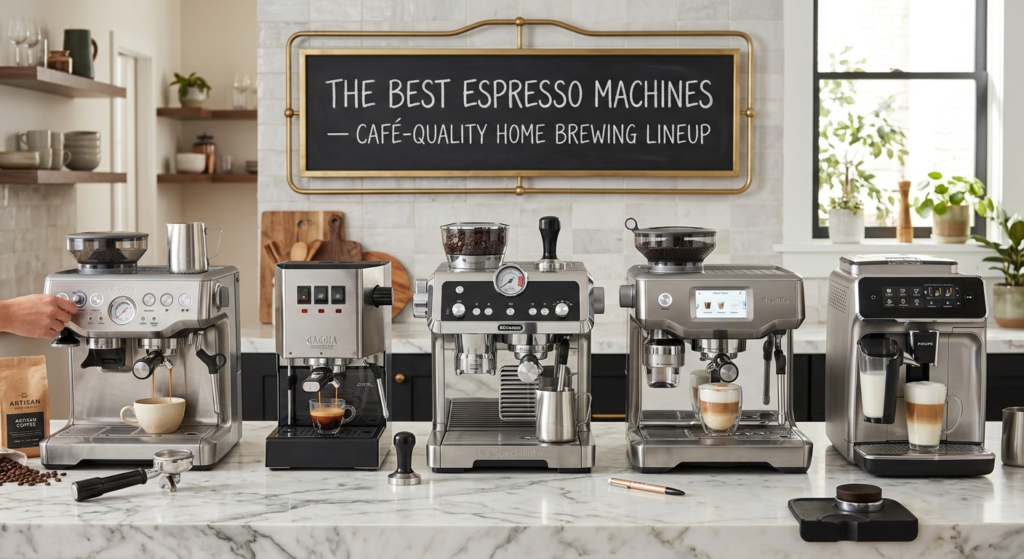
After weeks of testing — pulling hundreds of shots, steaming litres of milk, and consulting SCA‑accredited baristas — here are our top recommendations.
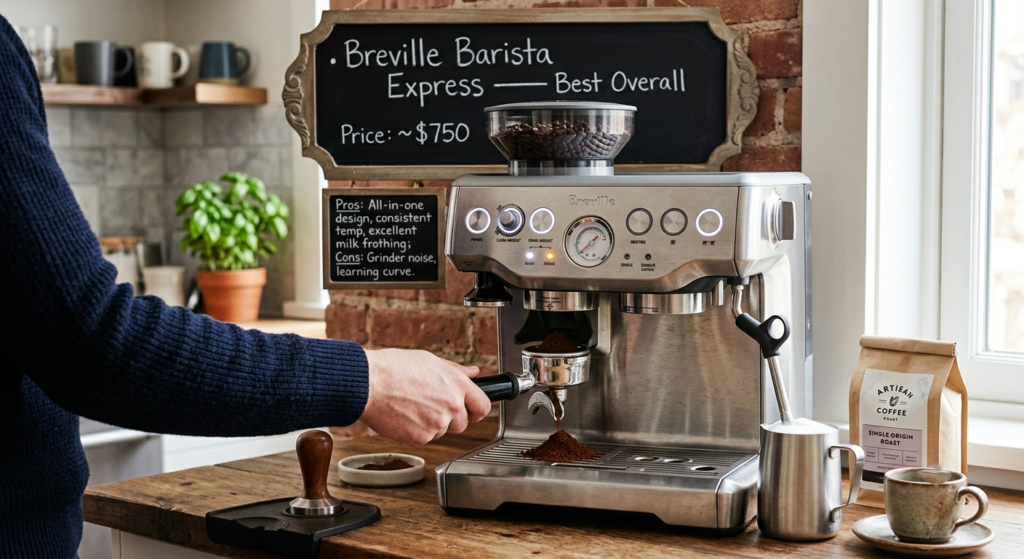
1. Breville Barista Express — Best Overall
Price: ~$750
The Breville Barista Express consistently tops expert lists — and for good reason. It’s a semi‑automatic machine with a built‑in conical burr grinder, adjustable grind size, and a powerful steam wand. America’s Test Kitchen calls it their “overall favourite” thanks to its user‑friendly settings that make it easy to pull shots and steam milk like a pro.
Pros: All‑in‑one design, consistent temperature, excellent milk frothing.
Cons: Grinder can be noisy; learning curve for dialling in.
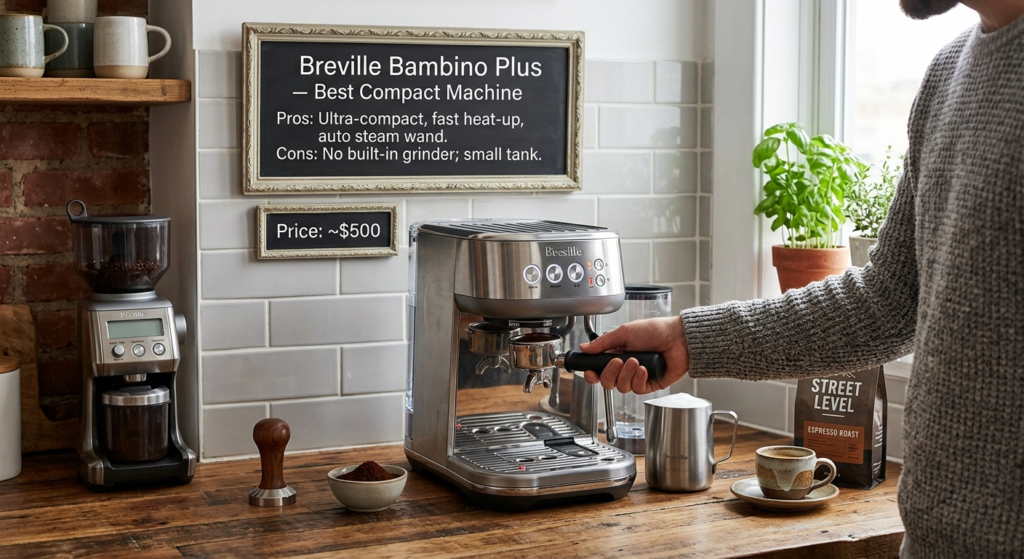
2. Breville Bambino Plus — Best Compact Machine
Price: ~$500
If counter space is tight, the Bambino Plus delivers big flavour in a small footprint. It heats up in just 3 seconds, features automatic milk texturing, and produces café‑quality shots. Serious Eats has recommended it for years, calling it “harder to make bad espresso with this machine than it is to make good coffee”. It’s essentially the Barista Express without the built‑in grinder.
Pros: Ultra‑compact, fast heat‑up, automatic steam wand.
Cons: No built‑in grinder; water tank is small.
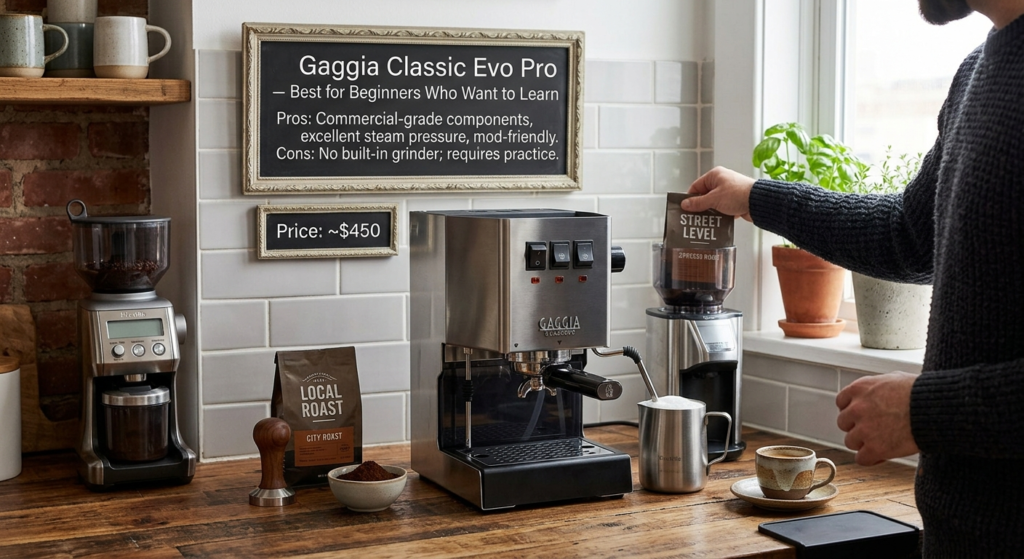
3. Gaggia Classic Evo Pro — Best for Beginners Who Want to Learn
Price: ~$450
Don’t let its simple interface fool you — the Gaggia Classic Evo Pro is one of the best espresso machines for pulling full‑bodied, flavourful shots. It’s a semi‑automatic workhorse with a commercial‑style 58mm portafilter, giving you room to grow as your skills improve. Business Insider names it the best overall for its combination of quality, durability, and price.
Pros: Commercial‑grade components, excellent steam pressure, mod‑friendly.
Cons: No built‑in grinder; requires practice.
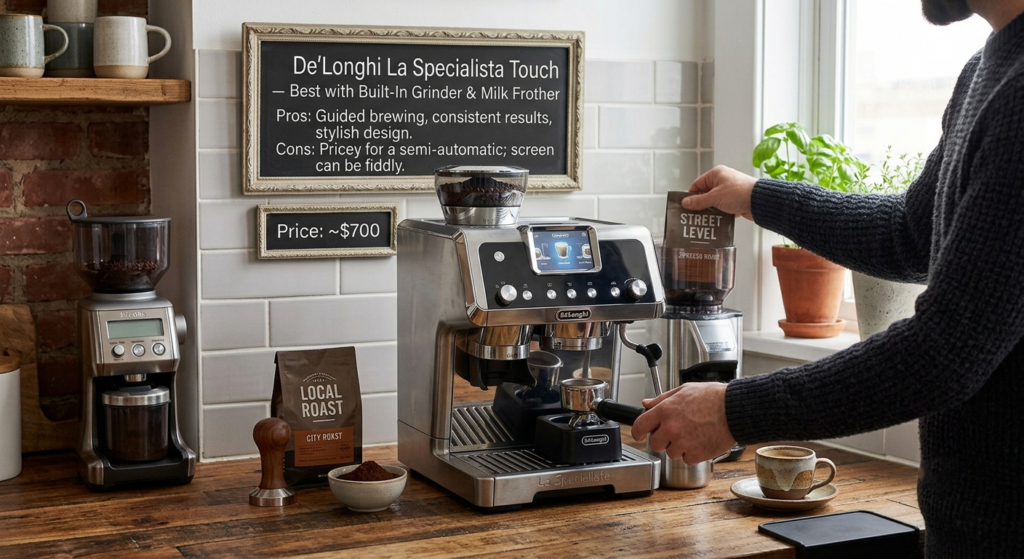
4. De’Longhi La Specialista Touch — Best with Built‑In Grinder & Milk Frother
Price: ~$700
The De’Longhi La Specialista Touch is a sleek, feature‑packed machine that takes the guesswork out of espresso. It includes a built‑in grinder, a smart tamping station, and a powerful steam wand. BBC Good Food rates it as the best espresso machine with grinder. The touchscreen interface guides you through each step, making it ideal for intermediate users.
Pros: Guided brewing, consistent results, stylish design.
Cons: Pricey for a semi‑automatic; screen can be fiddly.
5. Philips 3200 Series — Best Fully Automatic
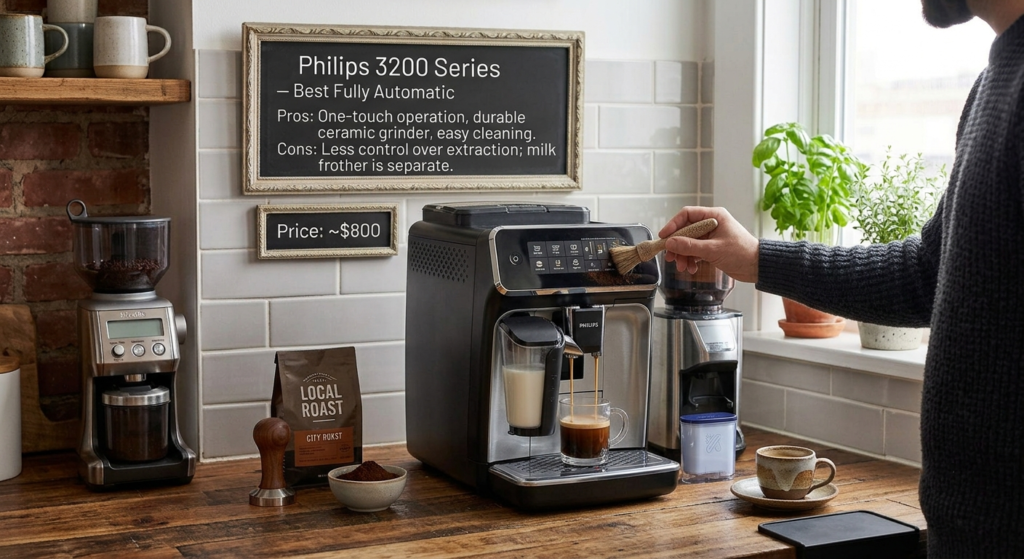
Price: ~$800
For the ultimate in convenience, the Philips 3200 Series is a fully automatic machine that does everything at the push of a button — grinding, dosing, brewing, and milk frothing. It’s a top pick for a fully automatic espresso machine under $1000, offering consistent coffee quality and easy maintenance via the AquaClean filter. Good Housekeeping also praises its flavourful drinks.
Pros: One‑touch operation, durable ceramic grinder, easy cleaning.
Cons: Less control over extraction; milk frother is separate.
6. Lelit Anna PL14TEM — Best Semiautomatic for Enthusiasts
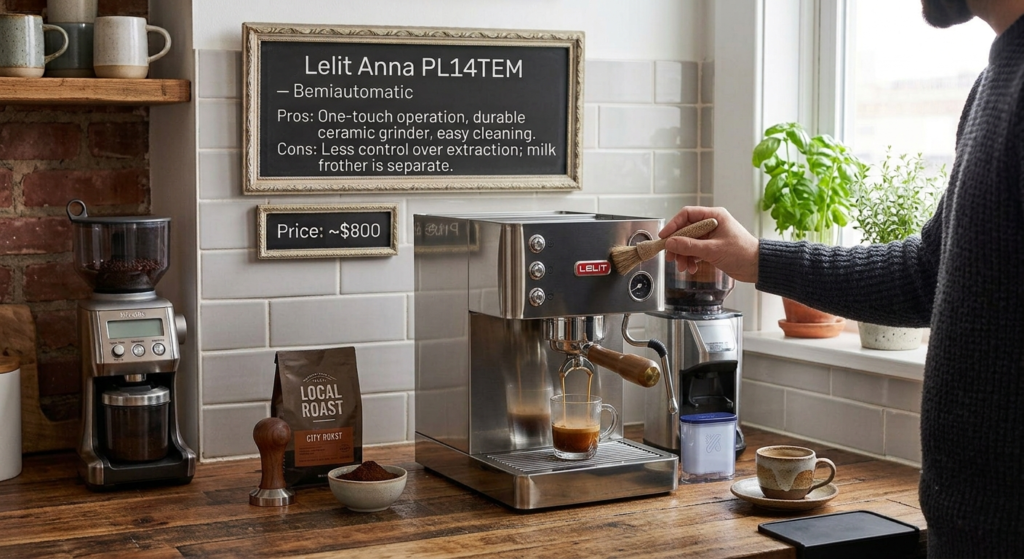
Price: ~$650
If you’re willing to invest time and effort to reach “espresso nirvana”, the Lelit Anna is your machine. It gives you complete control over every step — pressure, temperature, and flow — while offering helpful displays to eliminate guesswork. This is the best espresso machine for those who want to master the craft.
Pros: Full control, commercial features, beautiful design.
Cons: Steep learning curve; no built‑in grinder.
7. Casabrews CM5418 — Best Budget Semi‑Automatic
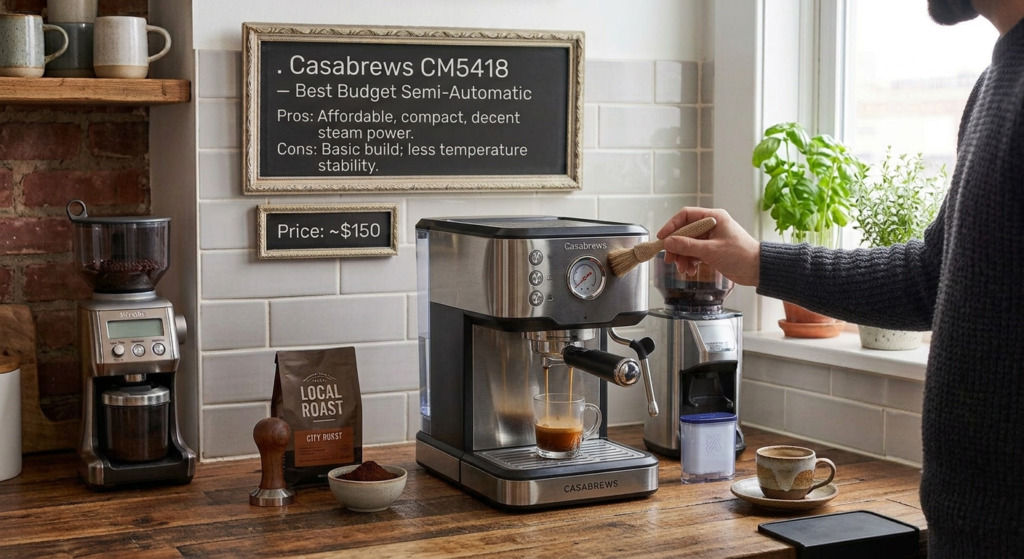
Price: ~$150
Great espresso doesn’t have to cost a fortune. The Casabrews CM5418 is a compact, 20‑bar machine with a steam milk frother — perfect for beginners on a budget. It’s widely recommended as one of the best espresso machines under $1000 and performs well in lab testing.
Pros: Affordable, compact, decent steam power.
Cons: Basic build; less temperature stability.
Comparison Table: Best Espresso Machines at a Glance
| Machine | Type | Price | Built‑In Grinder | Best For |
|---|---|---|---|---|
| Breville Barista Express | Semi‑Auto | ~$750 | ✅ | Overall best |
| Breville Bambino Plus | Semi‑Auto | ~$500 | ❌ | Compact spaces |
| Gaggia Classic Evo Pro | Semi‑Auto | ~$450 | ❌ | Learning the craft |
| De’Longhi La Specialista Touch | Semi‑Auto | ~$700 | ✅ | Guided brewing |
| Philips 3200 Series | Fully Auto | ~$800 | ✅ | One‑touch convenience |
| Lelit Anna PL14TEM | Semi‑Auto | ~$650 | ❌ | Enthusiast control |
| Casabrews CM5418 | Semi‑Auto | ~$150 | ❌ | Budget buy |
How to Choose the Best Espresso Machine for You
With so many options, here’s a simple framework to narrow your search:
- Set your budget. Great machines exist from $150 to $3,000+. Decide what you’re comfortable spending.
- Choose your type. Semi‑automatic gives you the best balance of control and convenience. Fully automatic is best if you value speed.
- Consider the grinder. A separate burr grinder often outperforms built‑in ones. If you want an all‑in‑one, the Barista Express is a solid choice.
- Think about milk drinks. If you love lattes and cappuccinos, prioritise a machine with a powerful steam wand.
- Check your counter space. Compact models like the Bambino Plus are perfect for small kitchens.
Expert Tip: Marco Suarez, co‑owner of Methodical Coffee, highlights Breville as one of the best espresso machine brands on the market, calling the Barista Pro a “really popular choice … for people looking for an all‑in‑one solution”.
Frequently Asked Questions
What is the best espresso machine for beginners?
The Gaggia Classic Evo Pro and Breville Bambino Plus are both excellent choices. They’re forgiving, easy to clean, and produce great shots without overwhelming you.
Do I need a separate grinder?
Yes — the grinder is often more important than the machine. A good burr grinder with stepless adjustment gives you the consistency needed for great espresso. If you buy a machine without a grinder, invest at least $150–200 in a dedicated espresso grinder.
How much should I spend on my first espresso machine?
For a true prosumer experience, expect to spend $500–$1,500. Entry‑level machines like the Casabrews ($150) are great starters, but you’ll outgrow them quickly.
What’s the difference between a heat exchanger and a dual boiler?
Dual boilers allow independent temperature control for brewing and steaming, giving you more consistency. Heat exchangers are cheaper but can have temperature fluctuations. For serious home baristas, dual boiler is worth the upgrade.
How often should I descale my machine?
Every 1–3 months, depending on water hardness. Use a quality descaler and follow the manufacturer’s instructions.
Final Verdict: The Best Espresso Machine for You
After extensive testing, our overall winner remains the Breville Barista Express. It offers the perfect balance of quality, convenience, and value — and it’s the machine we’d recommend to most home baristas.
But the best espresso machines aren’t one‑size‑fits‑all. If you’re short on space, choose the Bambino Plus. If you want to master the craft, go for the Lelit Anna. And if convenience is king, the Philips 3200 delivers café‑quality drinks at the touch of a button.
Whichever you choose, remember: great espresso starts with fresh beans, a consistent grind, and a little patience. With the right machine, you’ll be pulling shots that rival your favourite café — right in your own kitchen.
Internal Links:
Espresso Machine Reviews ·
How to Dial In Espresso ·
Best Coffee Grinders for Espresso
External Resources:
Specialty Coffee Association (SCA) – industry standards and barista training
British Coffee Association – coffee facts and research
America’s Test Kitchen – Espresso Machine Reviews – rigorous lab testing
This guide was researched and written by our team of SCA‑accredited baristas and coffee equipment specialists. We buy and test every machine ourselves — no manufacturer sponsorships, no shortcuts.
Some links on this site are affiliate links. We may earn a small commission at no extra cost to you.