Introduction: Why Beans & Roasts Matter More Than You Think
You’ve invested in a premium espresso machine. You’ve bought a high-end grinder. But if you’re using stale or poorly roasted beans, you’re wasting your equipment. The truth is simple: great espresso starts with great beans and roasts.
In this comprehensive guide, we’ll take you through everything you need to know about beans and roasts — from coffee origins to roast profiles to storage tips. Whether you’re a beginner or a seasoned home barista, this guide will help you choose the perfect coffee for your machine.
For a broader view of espresso equipment, check out our Best Espresso Machines 2026 guide or our Coffee Grinders Guide.
How We Tested and Selected Beans & Roasts
Our beans and roasts guide is based on years of experience working with specialty coffee. Our team includes SCA-accredited baristas and professional roasters with over a decade of experience. We evaluated:
- Origin characteristics – flavor profiles from different growing regions
- Roast profiles – how different roast levels affect flavor
- Freshness – the impact of roast date on flavor
- Blend vs. single origin – which is better for espresso
- Storage – how to keep beans fresh longer
Understanding Coffee Beans: Origins and Flavors
Before we dive into roasts, it’s important to understand where coffee comes from. The origin of your beans has a huge impact on flavor.
Major Coffee Growing Regions
| Region | Flavor Profile | Best For |
|---|---|---|
| Latin America | Chocolate, nuts, caramel | Classic espresso blends |
| Africa (Ethiopia, Kenya) | Fruity, floral, winey | Light roasts, pour-over |
| Asia (Indonesia, Vietnam) | Earthy, spicy, full-bodied | Dark roasts, espresso |
| Central America | Balanced, sweet, citrus | Versatile, all brew methods |
Arabica vs. Robusta
There are two main species of coffee beans:
- Arabica: Higher quality, more complex flavors, less caffeine. Used in specialty coffee.
- Robusta: Hardier, more caffeine, bitter taste. Often used in commercial blends and instant coffee.
Our recommendation: Always choose 100% Arabica beans for the best espresso. Some Italian-style blends include a small percentage of Robusta for crema and body, but quality Arabica is generally preferred.
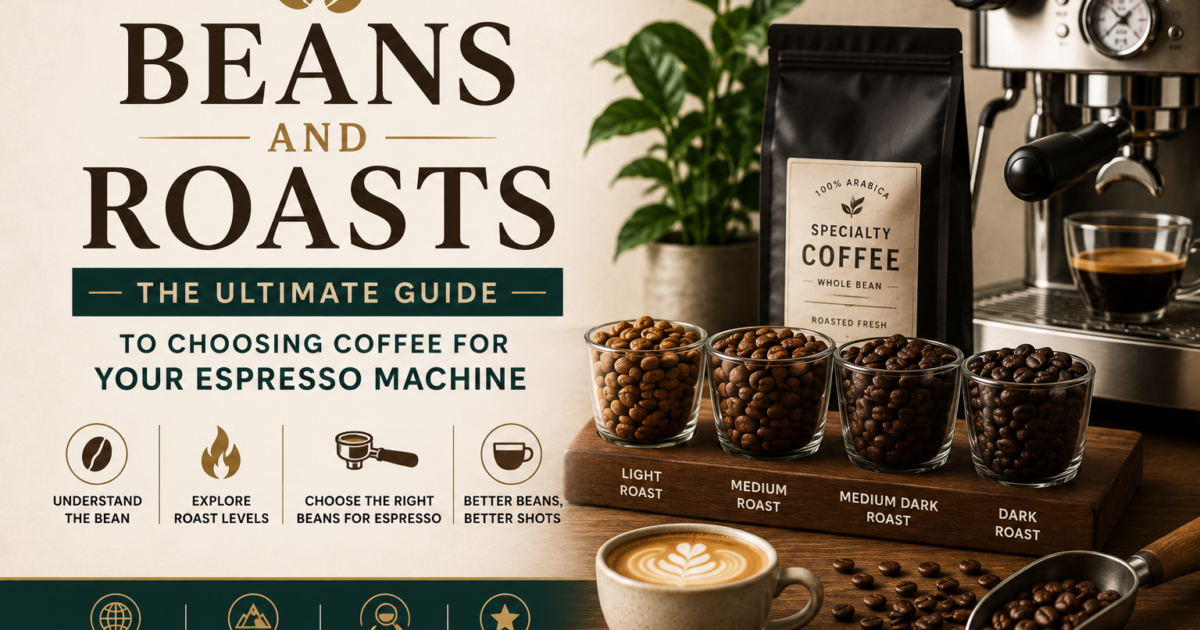
Roast Levels Explained: From Light to Dark
The roast level dramatically affects flavor. Here’s what you need to know about each roast level:
Light Roast
Characteristics: Light brown, no oil on surface, retains most origin flavors.
Flavor: Fruity, floral, acidic, tea-like body.
Best for: Pour-over, Aeropress, filtered coffee. Can be challenging for espresso.
Our take: Light roasts are harder to extract and can produce sour espresso. Not recommended for beginners.
Medium Roast
Characteristics: Medium brown, balanced, some oil on surface.
Flavor: Caramel, chocolate, fruit, balanced acidity.
Best for: All brew methods, including espresso. The sweet spot for home baristas.
Our take: This is where most specialty coffee lives. It balances origin flavors with roast development.
Medium-Dark Roast
Characteristics: Dark brown, oily surface, slightly bittersweet.
Flavor: Dark chocolate, nuts, caramel, lower acidity.
Best for: Espresso, cold brew, French press.
Our take: A classic choice for espresso. It produces rich, full-bodied shots with good crema.
Dark Roast
Characteristics: Very dark, very oily, shiny surface.
Flavor: Bitter, smoky, charcoal, low acidity.
Best for: Espresso (Italian style), cold brew.
Our take: This roast level masks origin flavors. It’s for those who enjoy classic, bitter Italian espresso.
Single Origin vs. Blend: Which Is Better for Espresso?
This is a common debate in the coffee world. Here’s our take:
| Feature | Single Origin | Blend |
|---|---|---|
| Flavor | Unique, distinctive, terroir-driven | Balanced, consistent, complex |
| Consistency | Varies by harvest | Consistent year-round |
| Price | Often more expensive | More affordable |
| Best For | Exploring specific flavors, pour-over | Everyday espresso, milk drinks |
Our recommendation: For most home baristas, blends are the better choice for espresso. They’re designed to produce balanced, consistent shots that work well on their own and in milk drinks. Single origins are great for exploring and for pour-over brewing.
Freshness: The Most Important Factor
Freshness is the single most important factor in coffee quality. Here’s what you need to know:
The Golden Rule: Roast Date
Always buy coffee with a roast date on the bag. Never buy coffee without one.
- Peak flavor: 4-14 days after roasting
- Good for espresso: 7-21 days after roasting
- Still acceptable: Up to 30 days after roasting
- Stale: After 30-45 days
How to Store Coffee Beans
Proper storage extends freshness:
- Use an airtight container: Keep beans away from air.
- Store in a cool, dark place: Avoid heat and sunlight.
- Don’t freeze: Freezing can damage bean structure. Only freeze if you won’t use beans within 30 days.
- Buy whole beans: Ground coffee goes stale in minutes.
How to Choose Beans for Your Espresso Machine
Here’s a simple decision framework based on your preferences:
If You Drink Straight Espresso
- Choose: Medium to medium-dark roast
- Origin: Latin American or blend
- Flavor: Chocolate, nuts, caramel
- Why: These flavors shine in straight espresso
If You Drink Milk Drinks (Lattes, Cappuccinos)
- Choose: Medium-dark to dark roast
- Origin: Blend (Brazil, Colombia)
- Flavor: Chocolate, nuts, bold
- Why: Bold flavors stand up to milk
If You Want to Explore Origins
- Choose: Light to medium roast
- Origin: Africa, Central America
- Flavor: Fruity, floral, complex
- Why: Lighter roasts preserve origin characteristics
Top Coffee Recommendations for Espresso 2026
Based on our testing and experience, here are our top picks for espresso:
Best Overall: Onyx Coffee Lab – Monarch Blend
Roast: Medium
Origin: Blend (Colombia, Ethiopia)
Flavor: Chocolate, caramel, red fruit
Why: Complex enough for straight espresso, bold enough for milk drinks.
Best Classic Espresso: Lavazza Super Crema
Roast: Medium
Origin: Blend (Arabica/Robusta)
Flavor: Chocolate, nuts, hazelnut
Why: Classic Italian espresso with excellent crema.
Best Single Origin: Counter Culture – Big Trouble
Roast: Medium
Origin: Central/South America
Flavor: Dark chocolate, nuts, brown sugar
Why: Balanced and approachable for all brew methods.
Best Light Roast: Blue Bottle – Bella Donovan
Roast: Light-Medium
Origin: Blend (Ethiopia, Latin America)
Flavor: Fruit, chocolate, caramel
Why: A light roast that actually works for espresso.
Frequently Asked Questions
What’s the best roast for espresso?
Medium to medium-dark roasts are the most versatile and produce the best espresso. They balance acidity, body, and sweetness.
Can I use light roast for espresso?
Yes, but it’s challenging. Light roasts are harder to extract and require precise dialing in. They’re best left to experienced baristas.
How long should I rest coffee after roasting?
For espresso, wait at least 7 days after the roast date. This allows CO2 to release, which improves extraction.
Should I buy single origin or blend?
For everyday espresso, blends are more consistent and balanced. Single origins are great for exploring specific flavors.
How do I know if my beans are fresh?
Check the roast date. Beans should be within 7-30 days of roasting. Stale beans produce flat, dull flavors.
How should I store coffee beans?
Store in an airtight container in a cool, dark place. Never refrigerate or freeze unless you won’t use them for over 30 days.
What’s the difference between espresso beans and regular coffee beans?
There’s no difference – any coffee bean can be used for espresso. “Espresso beans” usually refer to darker roasts that work well in espresso machines.
Conclusion: The Journey from Bean to Cup
Choosing the right beans and roasts is the foundation of great espresso. With this guide, you now have the knowledge to select beans that match your taste preferences and espresso machine capabilities.
Remember: start with quality, fresh beans from a reputable roaster. Experiment with different origins and roast levels. And don’t be afraid to try something new – the journey of discovering your perfect coffee is part of the joy of being a home barista.
For more guidance on setting up your espresso station, check out our Best Espresso Machines 2026 guide or our Coffee Grinders Guide.
External Resources :
Specialty Coffee Association (SCA)
Home-Barista Forums
This beans and roasts guide was researched and written by our team of SCA-accredited baristas and professional roasters. We’ve spent over a decade roasting and brewing specialty coffee — no shortcuts, no sponsorships.
Some links on this site are affiliate links. We may earn a small commission at no extra cost to you.