Espresso vs Drip Coffee: 5 Real Differences Explained
Espresso and drip coffee use the same beans but produce very different drinks. Here’s the real difference in brewing method, strength, and taste.
Espresso vs drip coffee is one of the most common questions coffee drinkers ask, and the short answer is: they’re not just “strong coffee” and “regular coffee.” They’re two genuinely different brewing methods that pull different things out of the same beans, which is why they don’t just taste different in intensity — they taste different in kind.
If you’ve ever wondered why a shot of espresso tastes syrupy and layered while a cup of drip coffee tastes clean and light, this is why. Let’s break down what’s actually happening in each cup.
What’s in this guide
How Each One Is Brewed
This is the actual root of the espresso vs drip coffee difference, and it comes down to pressure and time.
Espresso: Pressure and Speed
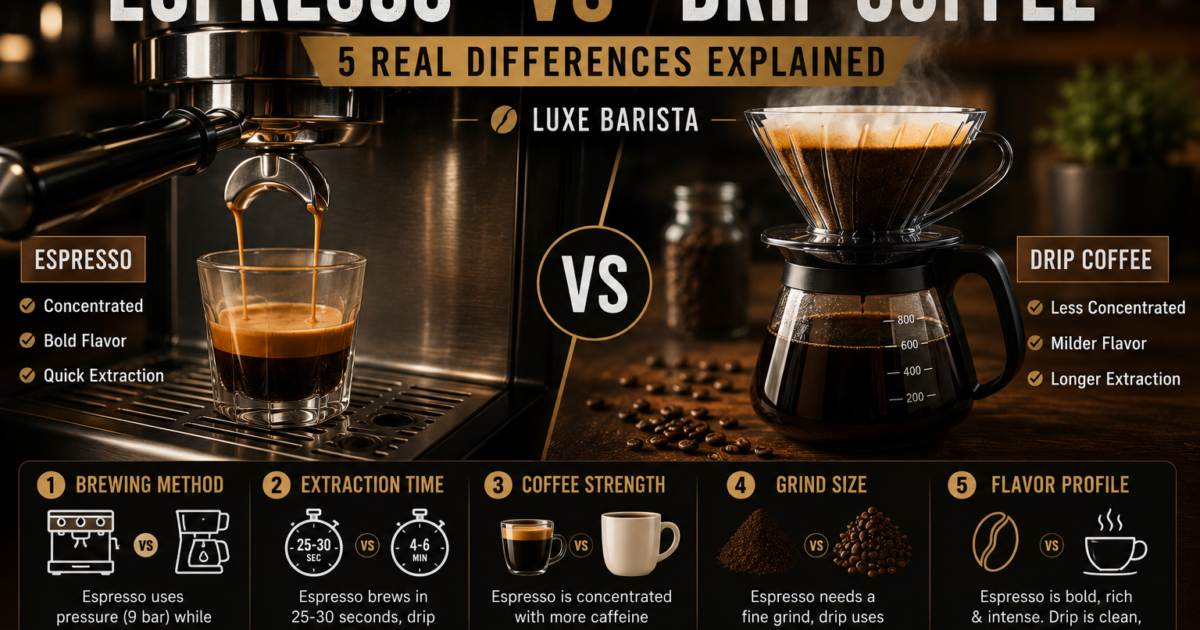
Espresso forces hot water through finely-ground, tightly-packed coffee at roughly 9 bars of pressure, extracting a concentrated shot in about 25-30 seconds. That pressure is what produces crema — the reddish-brown foam layer on top of a well-pulled shot — and it’s why espresso needs a dedicated machine rather than just hot water and gravity.
Drip Coffee: Gravity and Time
Drip coffee relies on gravity alone. Hot water passes slowly through coarser grounds and a paper or metal filter, typically over 4-6 minutes. There’s no pressure involved, which means a gentler, more even extraction — and no crema, since crema is a byproduct of pressure, not of the beans themselves.
Strength and Caffeine: The Real Numbers
This is where most of the confusion around espresso vs drip coffee actually lives. Espresso is more concentrated per ounce — a 1oz shot contains more caffeine, by volume, than 1oz of drip coffee. But nobody drinks coffee by the single ounce.
A typical serving of drip coffee is 8-12oz. A typical serving of espresso is 1-2oz (a single or double shot). Once you compare full servings rather than equal volumes, an average cup of drip coffee usually contains more total caffeine than a single espresso shot, even though the espresso tastes stronger.
| Espresso (1oz shot) | Drip Coffee (8oz cup) | |
|---|---|---|
| Typical caffeine per serving | ~63mg | ~95mg |
| Brew time | 25-30 seconds | 4-6 minutes |
| Brewing pressure | ~9 bars | None (gravity) |
| Grind size | Fine | Medium-coarse |
Caffeine figures are typical ranges and vary by bean, roast, and dose.
Taste and Body Differences
Beyond strength, espresso and drip coffee simply taste different in structure. Espresso has a thick, syrupy body and a layered flavor profile — the fast, pressurized extraction pulls out oils and compounds that a slower brew leaves behind, which is part of why espresso can taste more bitter or intense even at a small serving size.
Drip coffee has a lighter, cleaner body. The slower extraction and paper filtration (if used) strip out more oils, which lets subtler flavor notes — fruit, floral, or acidity characteristics — come through more clearly. This is a big reason light-roast, single-origin beans are so often brewed as drip or pour-over rather than espresso.
Want to dial in either brew method precisely? Get the right ratio for espresso, pour over, French press, and more.
Which Is Better for Which Occasion
Neither drink is objectively better — the espresso vs drip coffee question really comes down to what moment you’re brewing for.
- Espresso is the right call when you want something fast, concentrated, or as the base for a milk drink like a latte or cappuccino.
- Drip coffee is the right call for a slower morning, a larger serving, or when you want the beans’ subtler flavor notes to come through clearly.
Plenty of coffee drinkers keep both methods at home and simply pick based on the day. That’s a completely reasonable answer to “espresso vs drip coffee” — it doesn’t have to be one or the other.
Equipment Needed for Each
Drip coffee has a low barrier to entry: a drip machine or a manual pour-over setup, a kettle, and a filter is enough to get started. Espresso requires more dedicated equipment because of the pressure involved — you need an actual espresso machine and, in almost every case, a burr grinder capable of a fine, consistent grind.
If you’re just getting started with espresso specifically, our Espresso Machine Buying Guide walks through budget tiers and what actually matters when choosing your first machine, and our grinder guide covers what to pair it with.
The Bottom Line
Espresso vs drip coffee isn’t a strength contest — it’s two different brewing methods that pull different characteristics out of the same beans. If you’re ready to explore espresso specifically, start with our buying guide or browse our tested picks to find a machine that fits your budget and habits.
Frequently Asked Questions
Does espresso have more caffeine than drip coffee?
Per ounce, yes — espresso is far more concentrated. But per typical serving, an 8-12oz cup of drip coffee usually contains more total caffeine than a single or double shot of espresso, simply because the serving size is so much larger.
Is espresso vs drip coffee just about strength?
No. Strength is only one piece of the espresso vs drip coffee comparison. Brewing pressure, extraction time, grind size, and body all differ significantly, which is why the two drinks taste genuinely different even when made from the same beans.
Can I make espresso-style coffee without an espresso machine?
Not truly. Devices like the Moka pot or AeroPress can produce a concentrated, espresso-like drink, but neither reaches the roughly 9 bars of pressure a real espresso machine uses, so the crema, body, and extraction won’t fully match true espresso.
Which is better, espresso or drip coffee?
Neither is objectively better — they’re suited to different moments. Espresso is quick, concentrated, and the base for milk drinks. Drip coffee is suited to slower mornings and larger servings. Many coffee drinkers keep both brewing methods at home for different occasions.
Caffeine and extraction figures referenced from general industry guidance published by the National Coffee Association and the Specialty Coffee Association.
Some links on this site are affiliate links. We may earn a small commission at no extra cost to you.