Espresso Machine vs Nespresso: 6 Things to Know Before You Buy
Pod machines are convenient, but traditional espresso machines offer more control and better long-term value. Here’s an honest comparison to help you decide.
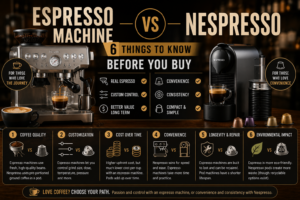
The espresso machine vs Nespresso question comes up constantly, and for good reason — both promise café-style coffee at home, and on the surface they look like they solve the same problem. They don’t, quite. One trades some control for convenience; the other trades some convenience for control, flavor range, and cost savings over time. Here’s an honest, unbiased breakdown to help you figure out which one actually fits how you drink coffee.
What’s in this guide
How Each One Works
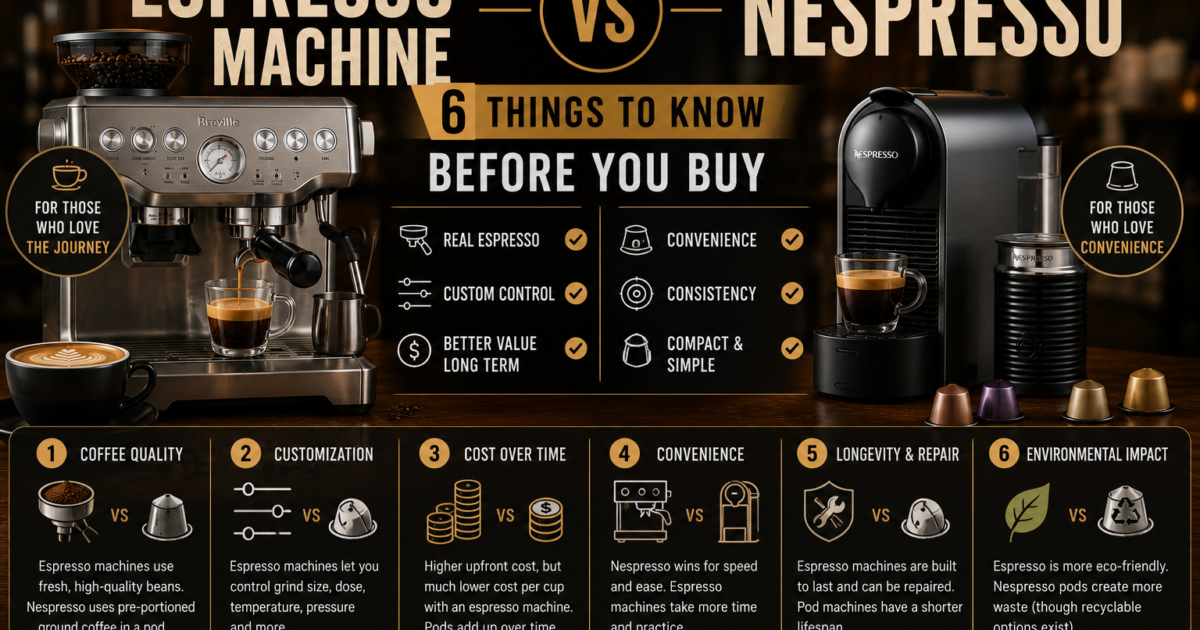
A Nespresso machine uses pre-portioned, pre-ground capsules. You insert a pod, press a button, and the machine pierces it and forces hot water through under pressure — typically in the 15-19 bar range. A traditional espresso machine requires you to grind fresh beans, dose and tamp them into a portafilter, and pull the shot yourself, usually around 9 bars of pressure with far more room for you to adjust variables along the way.
That single difference — pre-portioned capsule versus fresh, adjustable grounds — is the root of almost every other difference on this list.
Taste and Quality: Nespresso vs Real Espresso Machine
This is where the “pod machine vs espresso machine” debate gets the most opinionated, so here’s the practical version: Nespresso capsules are sealed and roasted for shelf stability, which means they’re rarely as fresh as beans you grind yourself right before brewing. Freshness has a real, noticeable impact on flavor.
A real espresso machine paired with freshly roasted, freshly ground beans has a meaningfully higher flavor ceiling — but only if you’re actually dialing it in correctly. A poorly dialed-in shot from a real machine can taste worse than a good Nespresso capsule. Consistency is Nespresso’s biggest strength; flavor ceiling is the espresso machine’s.
Cost Comparison Over Time
This is the part most first-time buyers underestimate. Nespresso pods typically cost noticeably more per drink than fresh whole-bean coffee bought in bulk, even after you account for the cost of a grinder. Over a year of daily use, that difference adds up — often enough to have paid for a mid-range espresso machine and grinder outright.
| Nespresso | Espresso Machine | |
|---|---|---|
| Typical machine cost | Lower upfront | Higher upfront (plus grinder) |
| Typical cost per drink | Higher (pods) | Lower (fresh beans in bulk) |
| Long-term cost (1+ years) | Adds up quickly | Usually cheaper overall |
| Upgrade path | Limited | Extensive |
Want the real numbers for your own habits? See your exact savings and payback period based on how much coffee you actually drink.
Convenience and Learning Curve
Nespresso wins this category outright. There’s no grinding, dosing, or tamping to learn — insert a pod, press a button, done in under a minute with almost no cleanup. A real espresso machine has a genuine learning curve, and your first few weeks of shots may be inconsistent while you learn to dial in grind size and dose.
Nespresso
Minimal learning curve, fast daily routine, easy cleanup, consistent results from day one.
Espresso Machine
Requires learning to dial in (grind size, dose, tamp), more daily steps, more cleaning — but full control over the result.
Environmental Considerations
Coffee pods generate more single-use waste per drink than whole beans, even accounting for recycling programs some Nespresso lines offer. If packaging waste is a priority for you, a real espresso machine using bulk-bagged or compostable-packaged beans is generally the lower-waste option over time.
Who Should Buy Which
Stick with Nespresso if…
- You want the absolute fastest, simplest daily routine
- You drink coffee occasionally, not multiple times a day
- Counter space and cleanup time are real constraints
Upgrade to a real machine if…
- You drink espresso daily and want it to taste noticeably better
- You’re willing to spend a few weeks learning to dial in
- You want lower cost per cup over the long run
If you land in the second group, our Espresso Machine Buying Guide walks through budget tiers and what actually matters when choosing your first machine, and our tested picks are a good place to start browsing.
The Bottom Line
Espresso machine vs Nespresso isn’t a contest with one universal winner — it’s a tradeoff between convenience and control. If you’re coffee-curious but not sure you’ll stick with a daily habit, Nespresso is a low-risk way to start. If you already know you’re drinking espresso every day, a real espresso machine will almost always taste better and cost less over time. See our buying guide to find the right one for your budget.
Frequently Asked Questions
Is Nespresso considered real espresso?
Not in the traditional sense. Nespresso machines use pressurized capsules and typically operate around 15-19 bars of pressure, but because the coffee is pre-ground, pre-dosed, and often not fresh, the result is closer to a strong, consistent espresso-style drink than true espresso pulled from freshly ground beans.
Is Nespresso worth it compared to a real espresso machine?
It depends on what you value. Nespresso is worth it if convenience and consistency matter most to you. A real espresso machine is worth it if you want more control over flavor, plan to drink espresso daily for years, or want a lower cost per cup over time.
Is a pod machine cheaper than an espresso machine long-term?
Usually not. Nespresso pods typically cost significantly more per drink than fresh beans purchased in bulk, so while the upfront cost of a pod machine is lower, a real espresso machine often becomes cheaper per cup within the first one to two years of regular use.
Can you make milk drinks with a Nespresso machine?
Many Nespresso models include or offer an attachable milk frother, so lattes and cappuccinos are possible. The milk texture and control are generally more limited than what a dedicated steam wand on a real espresso machine can produce.
Brewing pressure and industry figures referenced from general guidance published by the Specialty Coffee Association and the National Coffee Association.
Some links on this site are affiliate links. We may earn a small commission at no extra cost to you.