🔧 Maintenance · La Marzocco
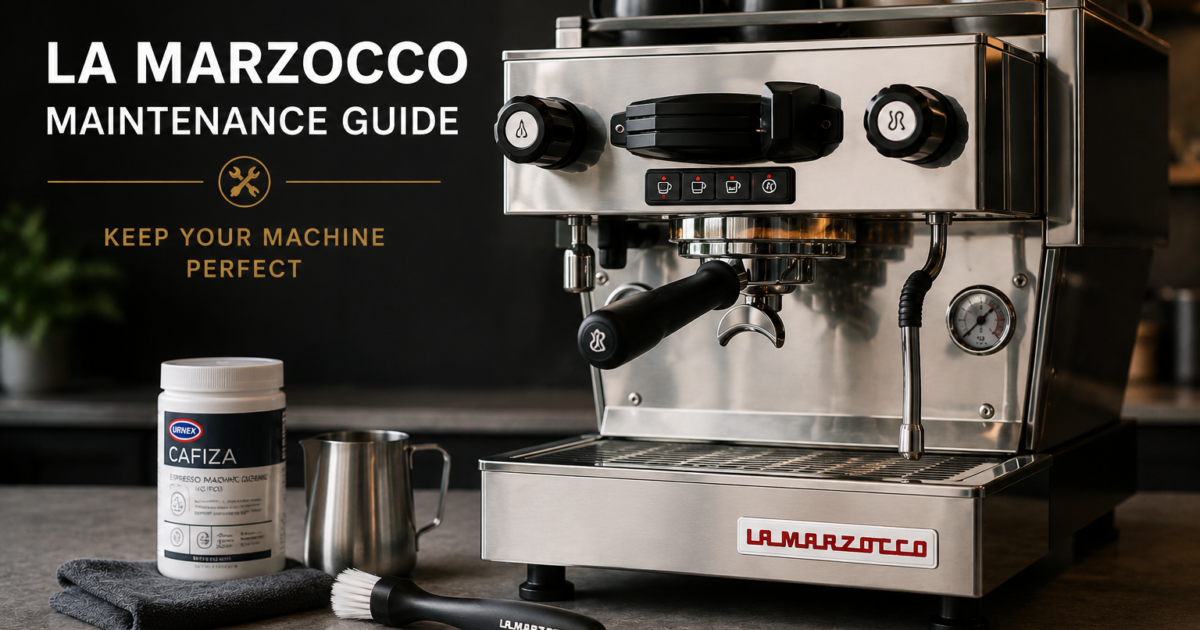
La Marzocco Maintenance Guide: Keep Your Machine Perfect
Daily, weekly, and yearly care for the Linea Mini, Linea Micra, and GS3 — including why La Marzocco doesn’t want you descaling it yourself.
Quick AnswerThis La Marzocco maintenance guide covers the Linea Mini, Linea Micra, and GS3: wipe down and purge the steam wand daily, backflush with detergent every 4–6 weeks, and use correctly filtered water instead of routine descaling — La Marzocco’s own guidance is to prevent scale rather than dissolve it. Plan on a group gasket check around the one-year mark and a professional boiler inspection every few years.
A La Marzocco is built to run for decades, but only if it’s looked after on its terms — which are a little different from a typical home espresso machine. This La Marzocco maintenance guide covers the daily-to-yearly routine for the Linea Mini, Linea Micra, and GS3, and the one piece of advice that surprises most new owners: La Marzocco doesn’t want you routinely descaling the machine at all.
Which machines this covers
The core routine below applies to all three of La Marzocco’s home dual-boiler machines, with a few model-specific notes throughout:
Linea Mini
La Marzocco Home app with scheduling and auto-backflush reminders. Removable reservoir or direct-plumb kit available.
Linea Micra
Same app ecosystem as the Mini in a smaller footprint. Most compact reservoir of the three — check it a little more often.
GS3 (MP / AV)
No app connectivity. Some units have a short built-in cleaning cycle, but it’s shorter than the full manual backflush below.
Daily maintenance
-
Wipe down the exterior
A soft, damp cloth on the panels and drip tray cover keeps coffee residue from staining the finish.
-
Rinse the drip tray
Empty and rinse it daily — standing liquid under the grate is the fastest route to mold and odor.
-
Purge and wipe the steam wand after every use
A quick burst of steam clears the internal passage, and a damp cloth wipe stops milk from baking onto the tip. Left overnight, dried milk is far harder to remove and can clog the holes.
-
Flush the group briefly before the first shot
A short flow of hot water through the group head clears out any water that’s been sitting since the last shot.
Weekly maintenance
- Soak baskets and the portafilter in a hot water and espresso machine detergent solution to dissolve built-up coffee oils that a quick rinse won’t touch.
- Clean the water tank (Linea Mini/Micra, if not direct-plumbed) with warm, soapy water and a thorough rinse to prevent mold or bacteria buildup — always refill with fresh water afterward.
- Check the steam wand tip for any dried residue in the holes; soak briefly in hot water with a little cleaner if steam pressure feels weaker than usual.
Monthly: the full detergent backflush
Every 4–6 weeks, run a proper detergent backflush through the group — this is the single most important step for keeping the solenoid valve and group internals free of coffee oil buildup.
-
Fit a blind basket
Remove your normal filter basket from the portafilter and swap in a blind (cleaning) basket.
-
Add detergent
Add about half a teaspoon of Biocaf or Cafiza cleaning powder to the blind basket.
-
Lock in and cycle
Lock the portafilter into the group and activate the brew paddle for 10 seconds, then let it rest for 10 seconds. Repeat this cycle five times.
-
Rinse the portafilter
Remove the portafilter and rinse off any remaining detergent residue.
-
Flush with clean water
Reinsert the portafilter with a clean (detergent-free) blind basket and repeat the 10-on/10-off cycle five more times to rinse the group completely.
Full guides with photos for each model are on our how to backflush an espresso machine page.
A dedicated La Marzocco Maintenance Schedule Generator — enter your model and water hardness for a personalized calendar — is in development. In the meantime, our Descaling Calculator covers general timing based on your local water.
Water quality and descaling
La Marzocco’s official guidance is to prevent scale rather than descale for it. Their boilers aren’t designed for a DIY citric-acid or vinegar flush the way a basic home machine’s are — the recommended fix is using water within their published hardness and alkalinity range from the start.
Test your water with a TDS meter or a water test kit and compare it against La Marzocco’s published spec for your model, then use filtered or bottled water that falls inside it if your tap water doesn’t qualify. Get this right and most home units go years without meaningful scale buildup.
If you do suspect scale — slower steam, longer heat-up, or an inconsistent brew temperature — don’t attempt to descale the boiler yourself. Have it inspected by an authorized La Marzocco technician, who will only open and descale the boiler if there’s actually buildup to justify it. This is also the warranty-safe path: attempting a DIY boiler descale with the wrong chemicals or process is the kind of thing that can put later warranty claims at risk.
Yearly and long-term care
- Group gasket: plan on replacing it around the one-year mark, or sooner if the portafilter starts feeling loose or you notice water leaking from around the group during a shot.
- Professional check-up: many owners schedule a technician visit every year or two for a general inspection, valve check, and gasket replacement.
- Boiler inspection: roughly every four years, have a technician check the condition of the boilers and descale them only if inspection shows it’s actually needed.
- Pump pressure: the brew gauge should read around 9 bar during extraction — if it’s drifted noticeably, have it checked.
Full schedule at a glance
| Frequency | Task |
|---|---|
| Daily | Wipe exterior, rinse drip tray, purge & wipe steam wand after use, brief group flush |
| Weekly | Soak baskets & portafilter, clean water tank (if not plumbed), check wand tip |
| Every 4–6 weeks | Full detergent backflush (Biocaf/Cafiza, 5 cycles + 5 rinse cycles) |
| ~1 year | Group gasket check/replacement; first professional check-up |
| ~4 years | Professional boiler inspection; descale only if buildup is found |
| Ongoing | Use La Marzocco-spec filtered/bottled water — this is what actually prevents scale |
Frequently asked questions
How often should I backflush my La Marzocco machine?
A detergent backflush every 4 to 6 weeks is the standard recommendation. Heavy daily users often add a plain water flush after each session.
Does a La Marzocco machine need descaling?
La Marzocco’s own guidance is to prevent scale rather than routinely descale: use water within their recommended hardness range, and let a technician open and descale the boilers only if an inspection actually shows buildup, roughly every few years.
What water should I use in a La Marzocco espresso machine?
Filtered or bottled water within La Marzocco’s published hardness and alkalinity range, checked with a water test kit or TDS meter. Untreated tap water in a hard-water area is the most common cause of early scale.
How do I clean the steam wand on a La Marzocco machine?
Purge it with a quick burst of steam and wipe it down immediately after every milk drink. For a deeper clean, soak the tip in hot water with a small amount of espresso machine cleaner.
What is the Linea Mini maintenance schedule?
Daily wipe-down and drip tray rinse, steam wand purge after every use, a weekly basket soak, a detergent backflush every 4 to 6 weeks, a group gasket check around one year, and a professional boiler inspection every few years.
Is it safe to descale a La Marzocco machine myself?
It’s not recommended. Boiler descaling is a job for an authorized technician — doing it yourself with the wrong chemicals or process risks damage that could put warranty coverage at risk.
How is GS3 maintenance different from the Linea Mini or Micra?
The core routine is identical, but the GS3 has no La Marzocco Home app, so there’s no automatic backflush scheduling. Some units have a short built-in cleaning cycle, but the full manual detergent backflush every 4 to 6 weeks is still recommended.
How often should I replace the group gasket?
Roughly once a year for a machine in daily use, or sooner if the portafilter feels loose or water leaks from around the group during a shot.
Do I need to clean the water tank on a Linea Mini or Micra?
Yes, if you’re using the reservoir rather than a direct plumb-in. Rinse it with warm, soapy water periodically to prevent mold or bacteria buildup.
What pressure should my La Marzocco pump gauge show?
Around 9 bar during extraction. A gauge that’s drifted noticeably from that is worth having checked by a technician.
Some links on this site are affiliate links. We may earn a small commission at no extra cost to you.